Coral shades darkened colonies, but symbiont counts tell a more cautious story
A Florida Keys field trial found that temporary shades helped two brain-coral species retain or regain darker color during 2024 heat stress. Yet tissue samples did not show a consistent shade-related increase in algal symbionts. Sampling at naturally shaded colony edges and the dominance of heat-tolerant Durusdinium limit what the color result alone can establish.
A coral can look darker without a field test showing that its microscopic partners became more abundant. That distinction sits at the center of a Florida Keys shading study published on October 2, 2026. In a 2024 trial at Newfound Harbor, researchers suspended shade cloth over selected colonies of two brain-coral species. The shaded colonies generally retained or regained darker tissue color during intense heat stress. But a separate measure of algal symbionts relative to coral host cells did not show a consistent benefit from shade across both species.
The study, by Karen Neely and colleagues in Frontiers in Marine Science, followed 20 colonies each of Pseudodiploria clivosa and Colpophyllia natans. Within each species, the researchers compared shaded and unshaded colonies over nine visits between July and November 2024. The shade material was specified by its manufacturer to reduce incoming light by 60%; the frames floated roughly 30 centimeters above the coral. This intervention could reduce added light and ultraviolet stress while the sea remained hot. It did not cool the water.
To track what an observer could see, the same diver used a CoralWatch color card at each visit. Higher bleaching-index scores meant darker tissue. The paper reports significantly higher scores for shaded P. clivosa at three peak-stress visits and for shaded C. natans at two. Both groups of shaded corals became darker after the late installation of the structures, while controls continued paling until temperatures fell. The color comparison is evidence for a short-term visual response in these particular colonies, not a measured gain in survival or reef-wide recovery.
The team also clipped small tissue samples and used quantitative PCR to estimate a symbiont-to-host ratio. This metric concerns the amount of algal DNA relative to coral DNA in a sampled piece, rather than how the whole colony appears to a diver. In P. clivosa, the ratio's rate of change did not significantly differ between shaded and control colonies during the rising heat interval. A significant difference did appear during the later recovery interval, when the control group's ratio increased faster. In C. natans, neither the warming nor the recovery interval showed a significant difference in the ratio's rate of change between treatments. Calling the overall result a shade-driven increase in symbionts would therefore go beyond the measurements.
Where the tissue was clipped matters. Permits allowed the researchers to sample colony edges, which could shade themselves, rather than the most exposed upper surfaces. For C. natans especially, those sampled edges were generally darker than the colony as a whole. The team also lacked complete PCR data at every visit for four colonies of each species, so it did not run the same repeated-measures analysis on the symbiont ratios that it used for the color scores. Those constraints do not erase the observed color difference; they narrow the biological explanation that the samples can test.
A second clue comes from the identity of the symbionts. Every sampled P. clivosa colony contained only Durusdinium during the study. This algal group is generally associated with greater heat tolerance. It also dominated all but one of the C. natans colonies, although a few carried detectable Symbiodinium. The authors suspect the severe 2023 marine heat wave may have favored surviving colonies with Durusdinium or led to a change in their partnerships. They did not measure these colonies' symbiont communities before that earlier heat wave, so the proposed history is a hypothesis, not an observed switch caused by 2023 conditions or by the 2024 shades.
Why might a coral darken without a matching rise in the measured symbiont ratio? The investigators propose two possibilities: the edge biopsies may have missed the upper surface where shade had its strongest effect, or the remaining algae may have changed their chlorophyll content without changing enough in number to alter the ratio. This trial did not directly settle which mechanism explains the color change. It also observed no bleaching-related deaths in either treatment group, leaving no basis for a mortality benefit estimate.
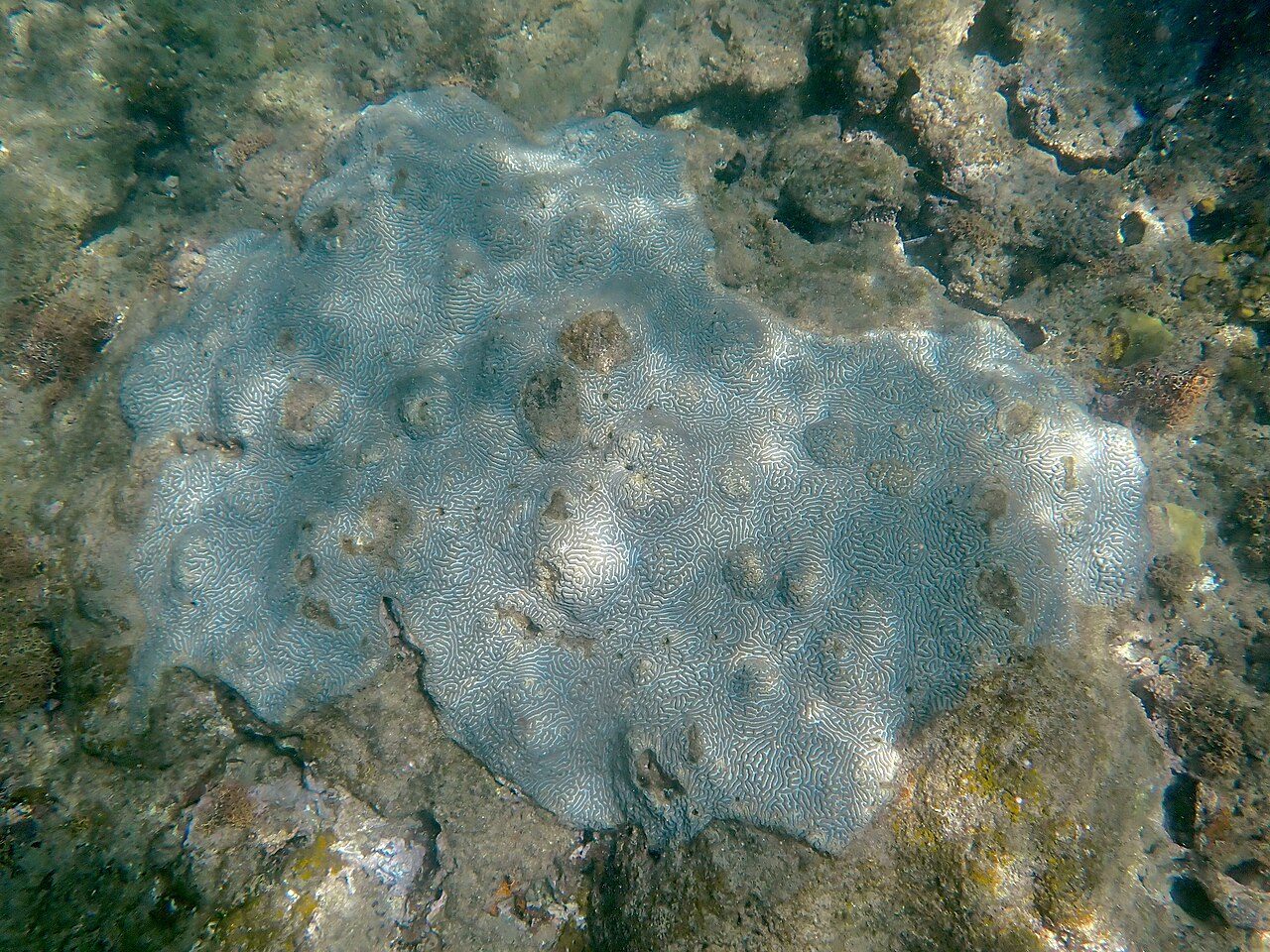
For managers and readers assessing targeted coral protection, the useful next test is therefore more specific than asking whether an underwater umbrella “worked.” Future field studies could sample exposed and sheltered parts of a colony where permits allow, measure chlorophyll alongside symbiont abundance, and track growth, disease and survival after the shade is removed. Those are proposed measurements, not results of this trial. The accompanying photograph shows P. clivosa in Puerto Rico as a species reference; it does not depict the Newfound Harbor experiment or reveal the pictured coral's symbiont community.
 프리즘코리아 편집국 > Nguyễn An