Coral shade trial reveals a 15-day gap in Florida reef heat records
A 2024 Florida Keys coral shading trial exposed a gap between satellite and reef-level heat records: NOAA’s series counted 61 days above the study threshold, while a surviving local logger counted 76. Permitting delayed shade installation until heat stress was already high, and storms forced two temporary removals. The study found a color benefit for shaded colonies, but it did not establish a survival benefit or show that the monitoring gap applies to other reefs.
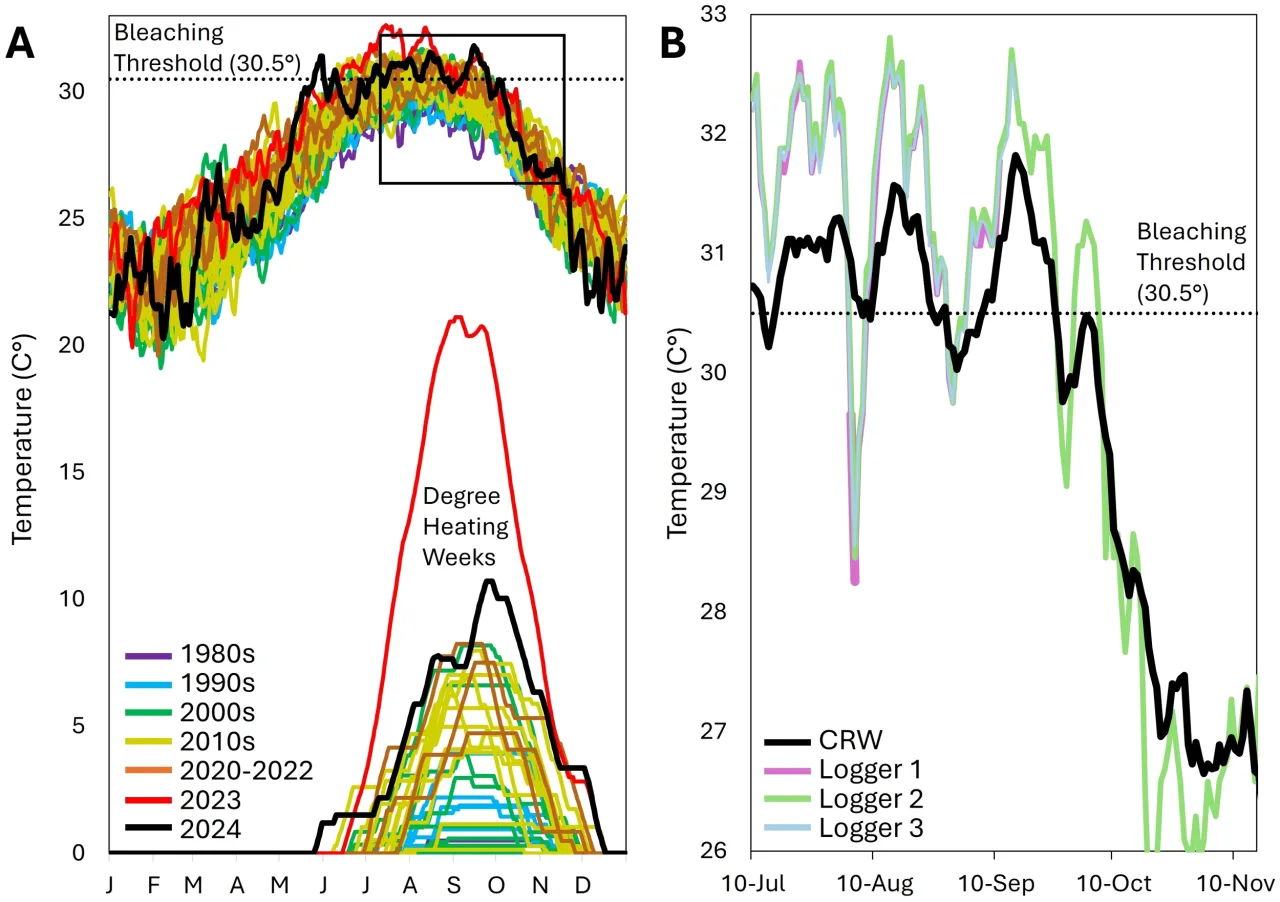
A coral shading experiment in the Florida Keys produced a useful warning about measuring marine heat waves: the satellite record and thermometers on the reef described the same broad summer, but they did not record the same number of dangerously hot days. In the 2024 Newfound Harbor trial, the NOAA Coral Reef Watch satellite series counted 61 days above the study site’s 30.5°C bleaching threshold after July 10. A local logger that lasted through the season counted 76. The difference matters when managers must decide when to install a temporary shelter over a vulnerable colony.
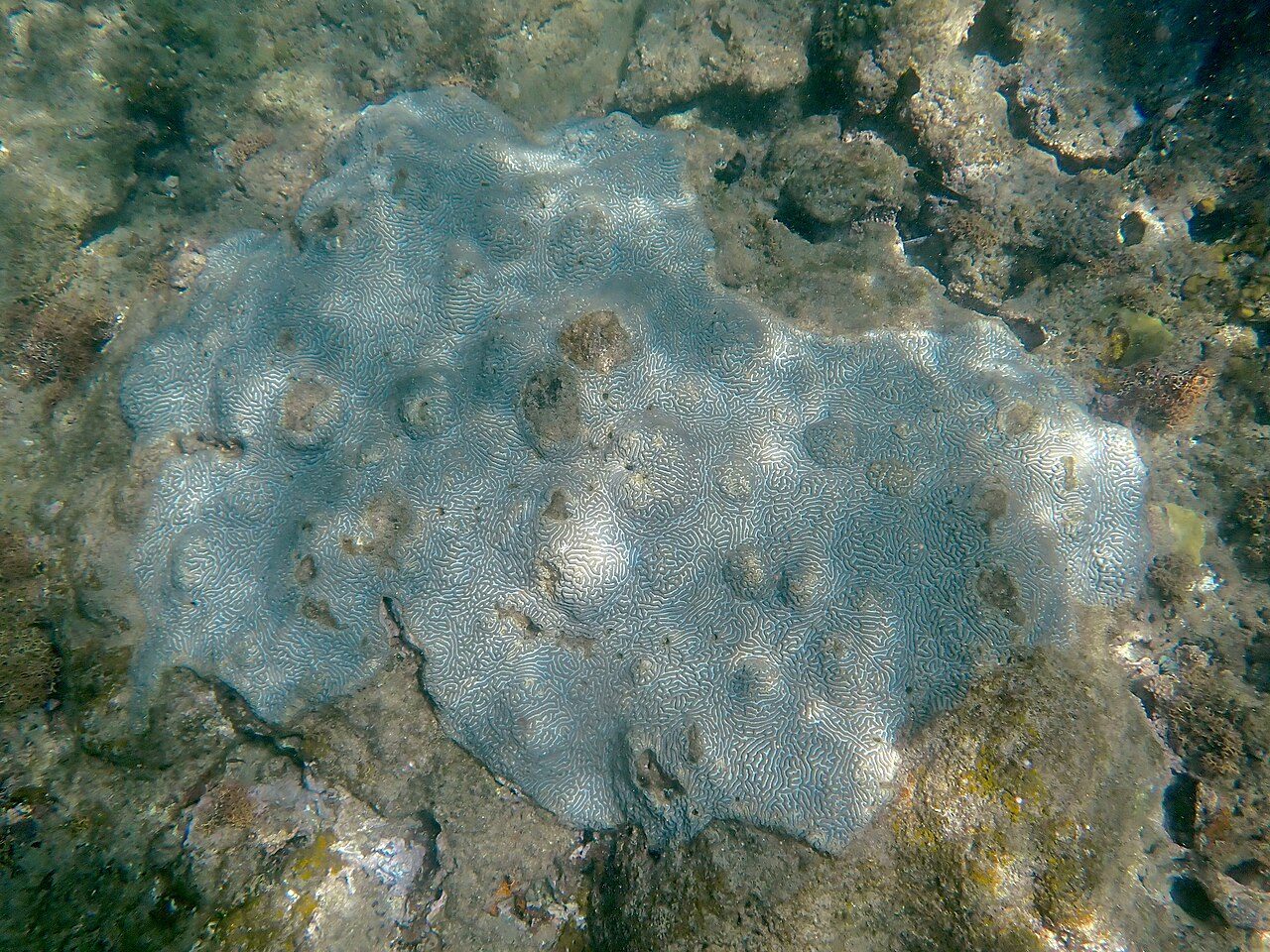
The field trial was reported by Karen Neely and colleagues in Frontiers in Marine Science on October 2, 2026. It took place in 2024 at a shallow patch reef south of Big Pine Key, not in 2026. The researchers selected two Caribbean brain-coral species and compared shaded colonies with unshaded ones. Their main result concerned color: shaded colonies were generally darker during peak thermal stress. This English-language report asks a different question from that biological result: what did the heat measurements tell the team about the timing and limits of a field intervention?
NOAA Coral Reef Watch describes degree heating weeks, or DHW, as accumulated satellite-observed heat stress over a rolling 12-week period. It combines how far sea-surface temperature exceeds the bleaching threshold with how long that excess persists. A DHW reading is therefore not a single thermometer temperature, and it is not a direct count of dead corals. The research team intended to deploy shades when local cumulative stress reached 4 DHW, a point associated with the onset of bleaching risk in their design.
Permitting changed that schedule. According to the paper, the structures were not installed until August 16–17, after the site had passed 7 DHW. Some colonies were already visibly pale. By late September, satellite-derived cumulative stress had reached 10.7 DHW, the site’s second-highest annual total in the record cited by the authors, exceeded only by 2023. This chronology prevents a claim that the shades had protected corals from the beginning of the heat wave. The trial instead tested a response introduced after stress was under way.
The two temperature records show why a regional alert and a local visit serve different purposes. The satellite product’s maximum sea-surface temperature was 31.8°C. Three loggers fixed to unshaded substrate in the study area recorded peaks of 32.6–32.8°C. Two failed in mid-September, so only the surviving unit supplied a full-season local count. The paper says those loggers followed a broadly similar temperature pattern while displaying more day-to-day variation. It does not establish that every coral experienced the logger peak or that the satellite product was defective; the instruments observe different spatial and temporal slices of water temperature.
Weather also interrupted the intervention. Researchers removed the shade structures for tropical storms during September 23–October 1 and October 7–14, then reinstalled them. They removed them permanently in November when the DHW value fell to about 4. The supports had to be cleaned at least every two weeks to limit fouling. Deployment, storm removal, reinstallation and maintenance are part of the evidence for feasibility. A static photograph of an “underwater umbrella” leaves out those operational demands.
The outcome does not turn the monitoring discrepancy into a forecast of coral survival. No Pseudodiploria clivosa colony died during the experiment; one Colpophyllia natans colony suffered storm-related damage after being dislodged. The study cannot estimate a survival benefit from shade where almost no heat-related mortality was observed. It also found that tissue color and the measured symbiont-to-host ratio did not change in the same consistent way. The team noted that heat-tolerant Durusdinium symbionts were already dominant, a possible reason that the 2024 response was milder than expected.
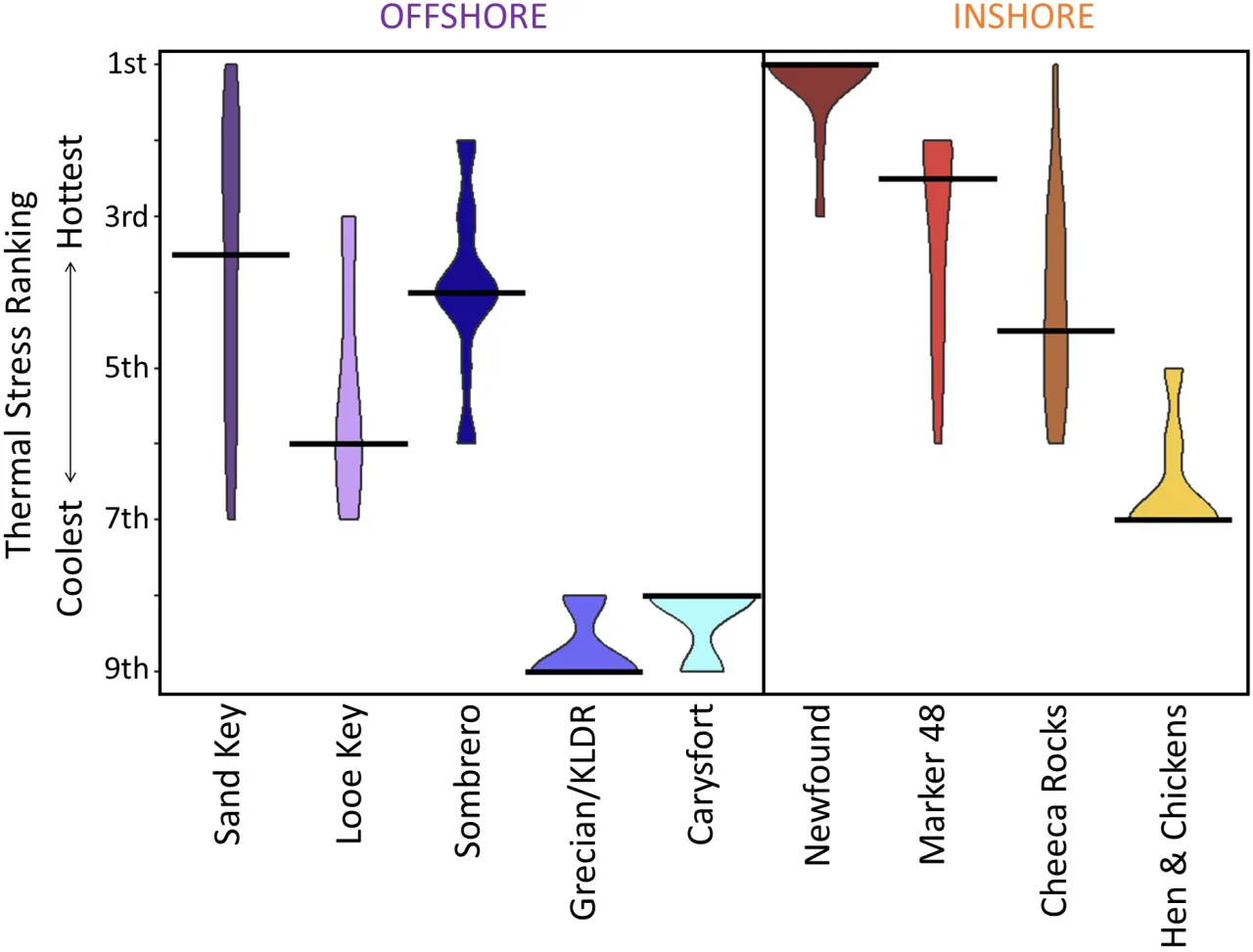
For readers considering whether such a tool could be transferred to another reef, the practical lesson is to pair broad heat alerts with local observations and a plan for permits, storms and maintenance. That is an inference from this one site’s measured differences and interruptions, not evidence that a 15-day discrepancy will occur elsewhere. The accompanying graph is Figure 3 from the original paper: it plots historical and 2024 temperature series, not present-day Florida conditions. Future trials would need to test earlier deployment, more severe bleaching and outcomes beyond temporary changes in color.
 프리즘코리아 편집국 > Nguyễn An