ESA picks Plasma Observatory: seven spacecraft to track solar energy through Earth's magnetic shield
On 19 November 2026 ESA formally selected the seven-spacecraft Plasma Observatory as its M7 medium-class mission, aiming to measure plasma processes across many scales at once.
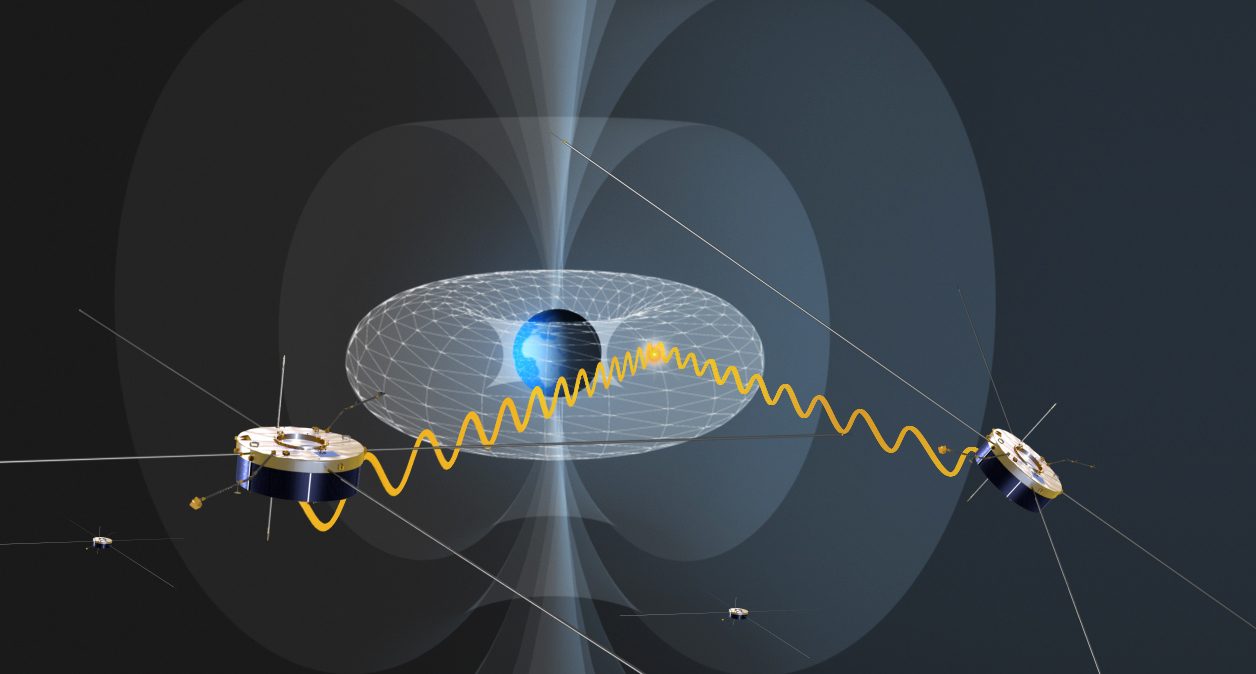
The European Space Agency said on 19 November 2026 that its Science Programme Committee has formally selected Plasma Observatory as the agency's next medium-class science mission, filling the M7 slot. ESA describes it as the first mission of its Voyage 2050 long-term plan. The committee brings together representatives of ESA's 23 Member States, and ESA had proposed the mission to it in June 2026.
The mission is a coordinated set of seven spacecraft. According to ESA, they will measure magnetic fields, electric fields and particles in seven places at the same time, with the aim of tracking how the Sun's energy moves through Earth's magnetic shield, the magnetosphere, across different scales of distance and time.
The key difference from earlier work is simultaneity. ESA says its four-spacecraft Cluster mission found that solar wind plasma interacts with Earth's magnetic environment on scales from a few kilometres to tens of thousands of kilometres, and from milliseconds to minutes, but that Cluster could only examine one scale of space and time at once. Plasma Observatory is designed to close that gap. The agency credits Cluster's results as groundwork for the new mission.
ESA officials framed the decision as a long-term investment. Carole Mundell, ESA's Director of Science, said Plasma Observatory "will take European leadership in heliophysics into the next decade and beyond." Matt Taylor, the mission's study scientist, said plasma's prevalence throughout the Solar System and the wider Universe means it is essential to understand, and described Earth's magnetic bubble as a natural laboratory.
The selection followed a process that began in 2021. ESA called for M7 proposals in December 2021 and received 27 responses; five concepts remained in November 2022, and Phase 0 studies between January and September 2023 cut the field to three. An industrial Phase A study of about 2.5 years then assessed scientific value, technical feasibility and complementarity before the June 2026 proposal and the November decision.
Much remains uncertain. ESA's article says launch is provisionally foreseen for the late 2030s, and it gives no cost figure or date for the next formal step, adoption, the decision that moves a mission into full implementation before construction and launch. In the same announcement ESA listed the next candidates: four medium-class M8 proposals (CALICO+, FOSSIL, PRIAMOS and SPARK) and three fast-class F3 proposals (GRINTA, MUSTI and SIRIUS). All seven begin initial studies in 2027; the F3 choice is expected in roughly a year and the M8 choice in 2030. For English-language readers following space-weather science, the practical point is that data from this multi-point approach is still well over a decade away.
 프리즘코리아 편집국 > Nguyễn An