World

UNGA coalition sets an economic cooperation agenda without new trade concessions

The P4M declaration names supply chains, finance and AI as areas for cooperation, while leaving tariff changes and funded programmes outside its announced commitments.

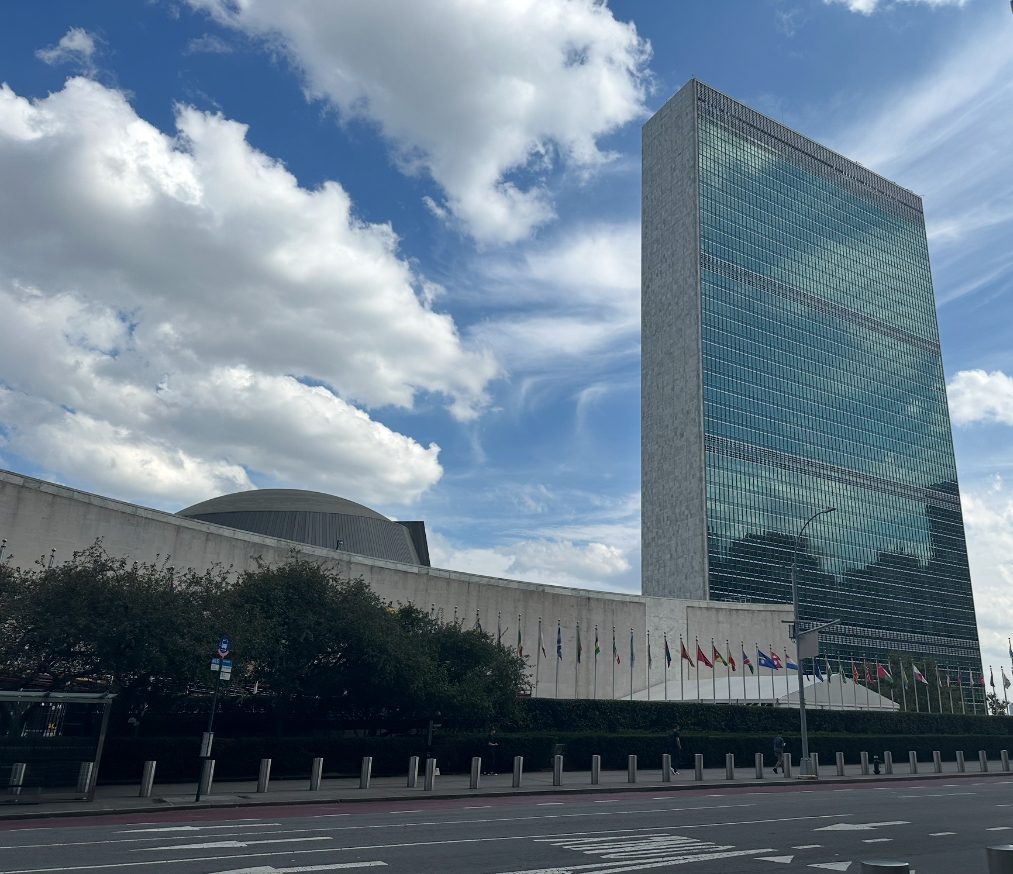
UN headquarters and Manhattan buildings seen across the East River
United Nations headquarters across the East River, New York, on 16 May 2026. A location reference, not a photograph of the September summit events. Bugsepoch / Wikimedia Commons, CC BY-SA 4.0. · 참고 이미지 / Reference image · Bugsepoch · 출처 / Source · CC-BY-SA · Contributor-declared changes: 1280px rendition and server compression; same license retained.. PRISM automatically re-encoded with JPEG quality 82; 1280x964 to 1280x964 pixels, aspect ratio retained with no upscaling.

A coalition launched beside the UN General Assembly is proposing cooperation across trade and finance and technology without presenting itself as a replacement for the UN. The September 21 Partners for Multilateralism declaration was sponsored by Australia, Barbados, Brazil, Canada, the EU, India and Kenya.

Interpretation

For businesses and policy readers, its economic section identifies diversified supply chains, changes to the trading system and financial architecture, and coordination on AI and digital transformation. It sets shared directions rather than announcing tariff cuts or a funded investment programme.

The text explicitly supports strengthening the United Nations through initiatives such as UN80. It also calls for regular exchanges open to partners from every region, giving the new grouping a continuing dialogue role.

Uncertainty

The event took place during UNGA high-level week, but its declaration belongs to its signatories. It is not evidence that all UN members adopted those economic proposals.

Adrian Cole프리즘코리아 편집국 > Adrian Cole

Original sources

  1. European Council, P4M declaration ↗
  2. European Council, P4M summit account ↗
Report an error ↗

Related stories

World · 2026.10.01

After Ekurhuleni, South Africa sets 60- and 90-day tests for stalled cases

President Cyril Ramaphosa’s response to the killings of women in Ekurhuleni gives police, justice officials and municipalities dated tasks. The first public test is whether case audits, forensic-backlog plans and safety inspections produce verifiable results, while investigators still have not established that one perpetrator committed the deaths.

World · 2026.09.28

Ekurhuleni killings: an arrest, a viral accusation and an unlinked death

South African police have reported an arrest in one Tembisa cemetery killing, rejected an unsubstantiated social-media accusation against another man, and found no preliminary link between a later fatal robbery and the Ekurhuleni cases. Dated official statements show why those separate findings cannot yet be treated as one solved investigation.

World · 2026.09.27

Black Sea grain request preceded Wadephul–Lavrov talks; no joint deal announced

Germany’s foreign minister proposed a Black Sea-first ceasefire at the UN on September 23, then raised grain exports with Russia’s Sergey Lavrov on September 26. The meeting revived direct contact, but the available German and Russian accounts do not establish a shared shipping deal or an implemented ceasefire.