World

Leo XIV calls for human oversight as scientists weigh AI's promise and risks

The Pope's September 24 science address pairs possible gains in medicine and food systems with warnings about autonomous weapons and unchecked technological power.
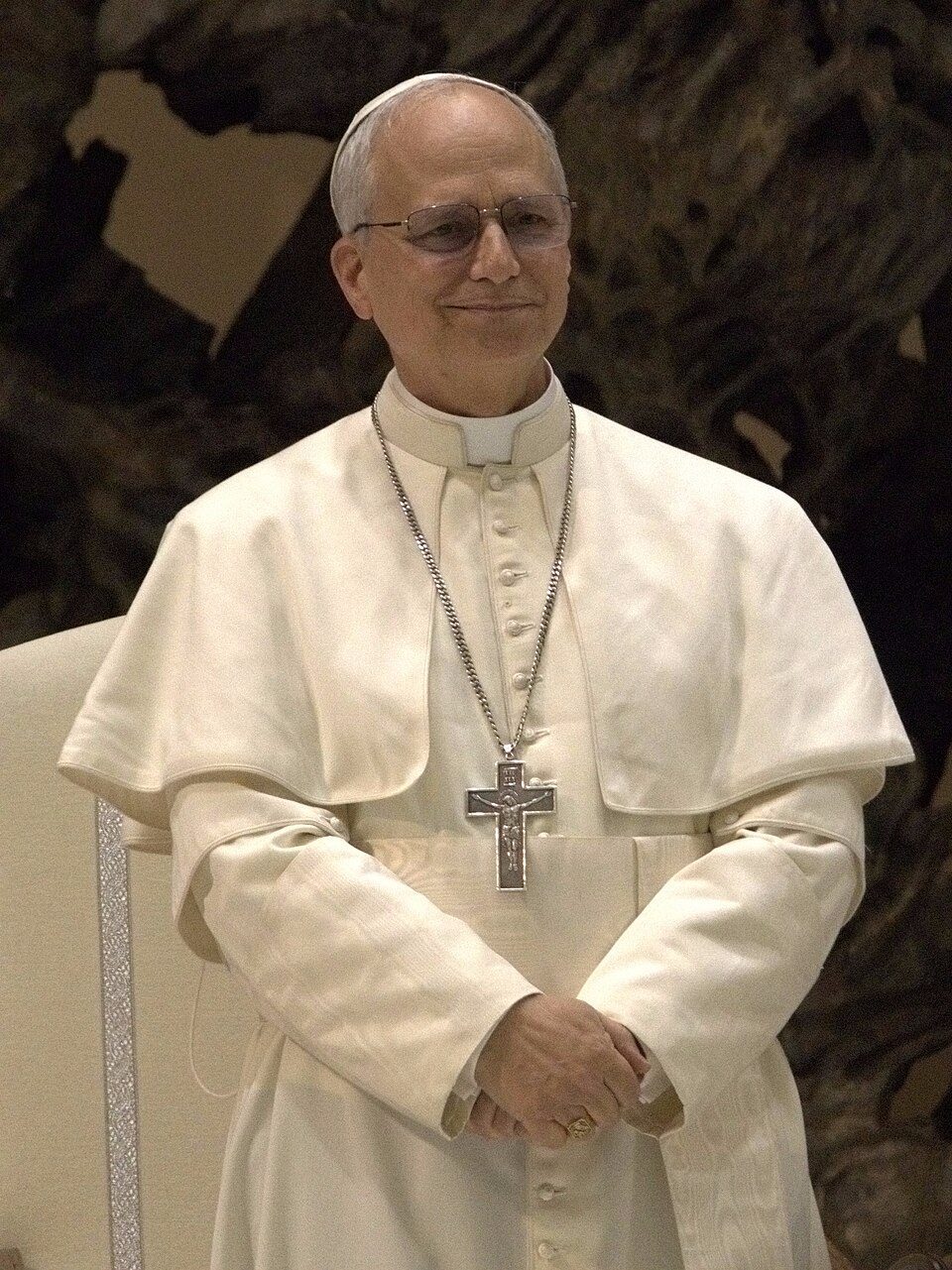
Leo XIV wearing white papal clothing and glasses, with his hands together.
Leo XIV at an audience with the media on May 12, 2025. Archival reference image, not his September 2026 France visit. Edgar Beltrán, The Pillar / Wikimedia Commons, CC BY-SA 4.0. · 참고 이미지 / Reference image · Edgar Beltrán, The Pillar · 출처 / Source · CC-BY-SA · Contributor-declared changes: Original Commons derivative uses3x4crop and chroma noise reduction; prior960px proportional rendition and compression retained. English caption added; no further visual alteration. CC BY-SA4.0 retained.. PRISM automatically re-encoded with JPEG quality 82; 960x1281 to 960x1281 pixels, aspect ratio retained with no upscaling.

Pope Leo XIV related the promise of scientific AI to the need for human oversight in a speech to the Pontifical Academy of Sciences on September 24. He warned that autonomous weapons and advanced cyber capabilities could threaten security and peace when developed or deployed without adequate safeguards.

The appeal sits alongside his recognition of possible gains in medicine, food and energy systems. He did not present AI as uniformly harmful, and said its full impact remained uncertain. His argument was that greater technical power demands greater responsibility for its consequences.

Interpretation

The speech also raised surveillance, manipulation and discrimination, extending the ethical question beyond whether a system performs a task well. The concern is how people and institutions choose to use it.

Uncertainty

For readers following AI governance, this is a moral appeal to the scientific community, not a new weapons treaty, an enforceable safety standard or evidence that a particular model has been tested.

Adrian Cole프리즘코리아 편집국 > Adrian Cole

Original sources

  1. Holy See, address to Pontifical Academy of Sciences ↗
Report an error ↗

Related stories

World · 2026.10.01

After Ekurhuleni, South Africa sets 60- and 90-day tests for stalled cases

President Cyril Ramaphosa’s response to the killings of women in Ekurhuleni gives police, justice officials and municipalities dated tasks. The first public test is whether case audits, forensic-backlog plans and safety inspections produce verifiable results, while investigators still have not established that one perpetrator committed the deaths.

World · 2026.09.28

Ekurhuleni killings: an arrest, a viral accusation and an unlinked death

South African police have reported an arrest in one Tembisa cemetery killing, rejected an unsubstantiated social-media accusation against another man, and found no preliminary link between a later fatal robbery and the Ekurhuleni cases. Dated official statements show why those separate findings cannot yet be treated as one solved investigation.

World · 2026.09.27

Black Sea grain request preceded Wadephul–Lavrov talks; no joint deal announced

Germany’s foreign minister proposed a Black Sea-first ceasefire at the UN on September 23, then raised grain exports with Russia’s Sergey Lavrov on September 26. The meeting revived direct contact, but the available German and Russian accounts do not establish a shared shipping deal or an implemented ceasefire.