Busan's shark crowds: why 483,000 and 568,800 are different counts
Visitor totals attached to Bukangi cover different time windows. A September 28 English report separated four holiday days from a longer cumulative count. Keeping those periods apart avoids inflating attendance or treating park visits as a count of distinct tourists.

The crowd around Bukangi has produced impressive numbers, but the figures do not all measure the same period. In its September 28 report, Yonhap, carried by The Korea Times, attributed 568,800 visits since September 19 to Busan Infrastructure Corp. It separately reported 483,000 across the four-day Chuseok holiday. Adding those totals would count an overlapping period twice.
The daily holiday figures in that report were 101,000, 136,000, 140,000 and 106,000. Their sum is 483,000; their four-day average is 120,750, an editorial calculation rather than an additional official estimate. A cumulative total, a daily average and the busiest single day answer different questions. They should not be exchanged simply because each illustrates the shark's popularity.
Busan's own September 28 release used a rounded figure of about 570,000 in its holiday discussion without supplying the same daily breakdown. That wording does not resolve the period difference. For a comparison, readers need the underlying dates and counting method. The documents reviewed here also do not establish that every recorded visit represents a different person, an out-of-town tourist or a visitor who saw the shark.
The operational significance is clearer than an economic valuation: the city described crowd and traffic management, patrols near the water and inspections of facilities. Its original release said 637 personnel were deployed during the holiday safety effort; it did not establish that 637 were simultaneously present at one spot. Attendance alone cannot calculate local spending, net tourism gains or the rescue budget.
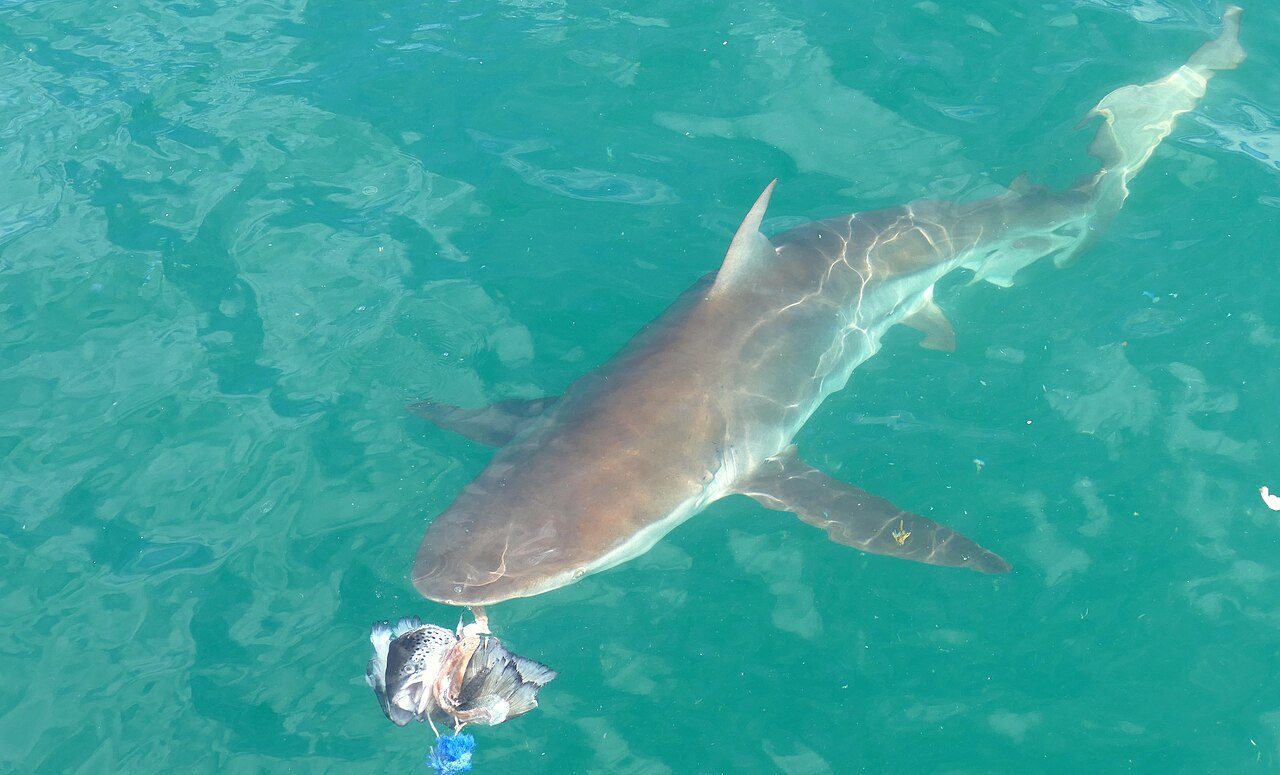
The September 29 attempt to guide the shark out later stopped without a release, according to Yonhap's field report. Further attendance updates therefore need fresh cut-off times. These earlier figures describe a documented surge, not the number at the park now. The photograph accompanying this article is a 2012 Australian aquarium reference image of another shark, not a record of the Busan crowds.
 프리즘코리아 편집국 > 森川結衣 · Yui Morikawa