FAA ground stop: what is confirmed, and where accounts still conflict
The 13 November nationwide departure halt left officials, the maker of an AI scheduling tool and outside experts offering differing explanations. A look at what the record supports and what remains open.
The Federal Aviation Administration ordered a ground stop at all US airports on Friday, 13 November 2026, citing communication problems affecting several air route traffic control centers. In a short statement the agency said technicians were investigating and would provide updates, and it cautioned that the information was preliminary and subject to change.
The timeline is not identical across sources. Al Jazeera reports the nationwide order at 3:54 p.m. Eastern and the reopening of airspace at 8:15 p.m., which works out to about four hours and 20 minutes, although the same report describes the stop both as "five hours" and as "more than four hours." The Air Current, an aviation trade outlet, puts the FAA's ground stop for eastbound flights at 3:44 p.m. and says it was widened to the whole country as more facilities failed. The outlet also says the FAA command center was told around 3:30 p.m. that several centers had lost radio frequencies and radar.
The Air Current reports that the problems appeared first at the Chicago center, with Boston, Washington, New York and Minneapolis quickly confirming trouble. It adds that a dispatcher at one US carrier was told the outage was affecting 10 en route centers and growing. Airborne flights were allowed to continue to their destinations, and international departures were handled case by case.
The scale of disruption was large. Al Jazeera, citing the analytics firm Cirium, says about 11,000 flights carrying more than 1.5 million passengers were scheduled to depart after 4 p.m. By 7:05 p.m., at least 827 flights had been diverted, 670 of which returned to their departure airports. FlightRadar24 counted more than 4,700 cancellations and about 10,000 delays on Friday, with roughly 700 Saturday flights already cancelled. The Air Current says stranded aircraft outnumbered gates at hubs such as Chicago O'Hare, that airlines diverted planes to smaller cities, and that United Airlines opened its Emergency Operations Center. Canada's air navigation provider, Nav Canada, applied traffic management measures at Toronto, Montreal, Calgary and Vancouver while saying its own systems were working normally.
On cause, the public explanations differ in emphasis. Transportation Secretary Sean Duffy said switches and routers were overloaded with data and failed, but that communications and radar were not completely lost. Officials also said new technology added to the system overloaded older components, producing intermittent communication and radar gaps. Homeland Security Secretary Markwayne Mullin said there was no indication of a cyberattack or terror threat and called it "just a telecommunications outage," though The Air Current notes he did not entirely rule out a cyberattack.
One open question is whether SMART, an AI-based tool that gives controllers scheduling recommendations using weather, route and arrival and departure data, played any part. Duffy said it was switched on at all 22 route centers on 10 November, and Mullin said investigators were looking at any possible link. Its developer, Air Space Intelligence, said on X that the ground stop was not caused by SMART or its products. Nothing published so far establishes a connection either way.
Aging infrastructure is the backdrop. Al Jazeera says a September Government Accountability Office report, GAO-26-107992, warned about copper cables dating to the 1960s, modernization delays and system changes that overlapped and could overwhelm the network. Duffy renewed a call for $50 billion in air traffic control upgrades and said the system relies on old equipment. Analysts quoted by Al Jazeera asked why redundant backups did not take over immediately and why contingency plans were not stronger given the earlier warning; AirSafe.com's Todd Curtis said failures were concentrated in the 21 route centers and that full recovery could take more than a day because airline hub networks are tightly interconnected.
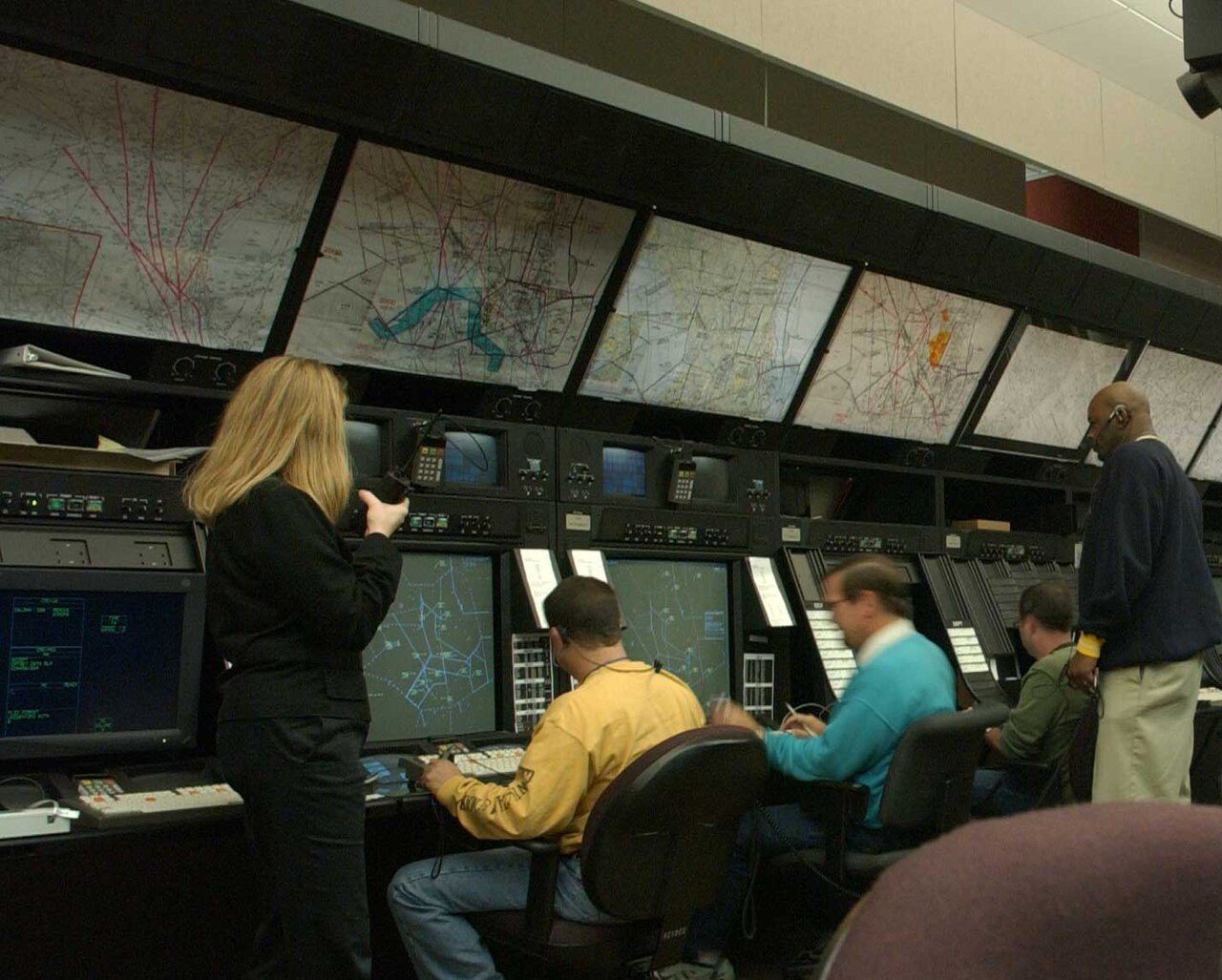
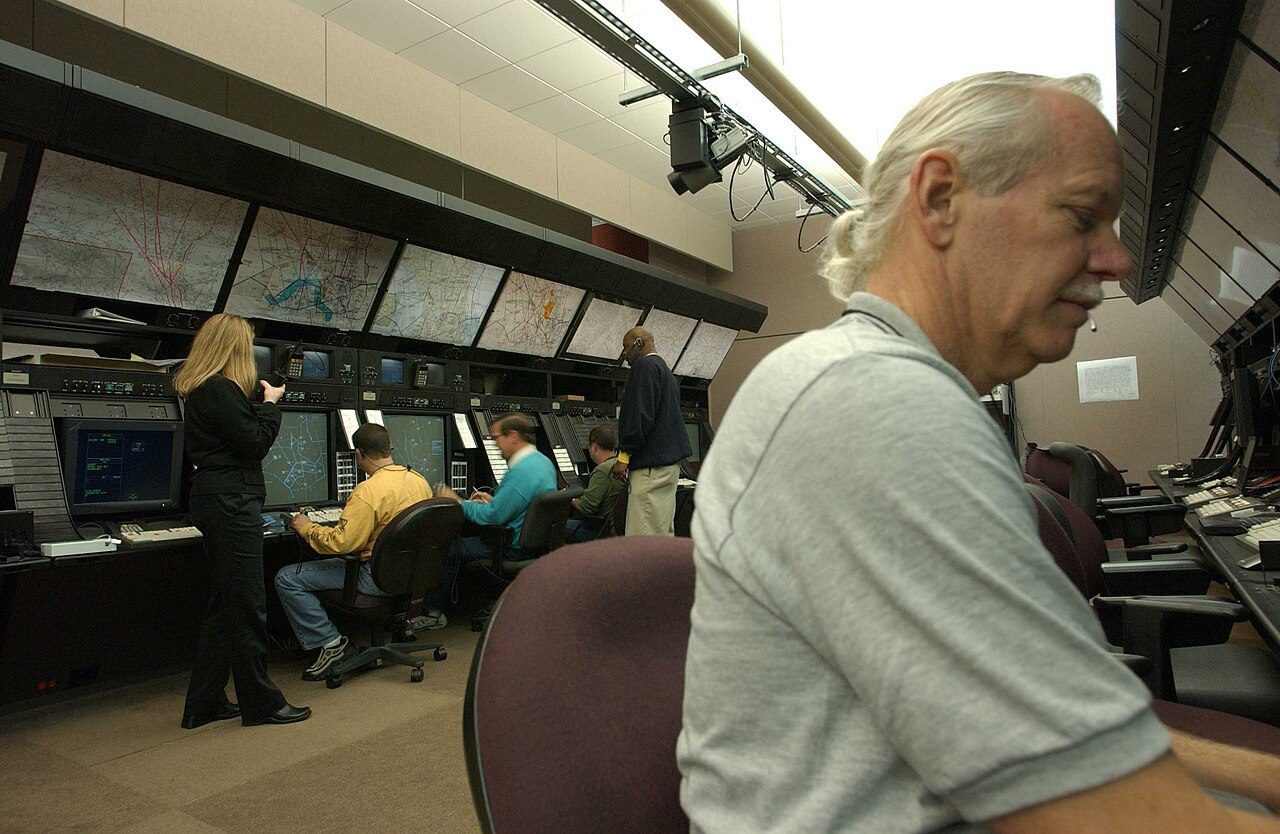
Several points remain unsettled. The reported stop length varies by source, Al Jazeera's own text is inconsistent on whether this was the second or third nationwide halt of all departures, and the cause has not been confirmed by the FAA. The flight counts are same-day tallies likely to be revised. Duffy said the airspace had reopened but recovery would be slow and depend on pilot and crew availability, and he expected normal operations by Thanksgiving, less than two weeks away. Travelers are advised to check flight status directly with their airlines. The photograph is an FAA file image of the Washington center, not a picture from 13 November.