World

CNN access brief links newsroom exclusions to a wider information loss

A media coalition's September 23 filing argues that exclusion can chill other outlets and limit the reporting reaching audiences beyond the affected newsrooms.
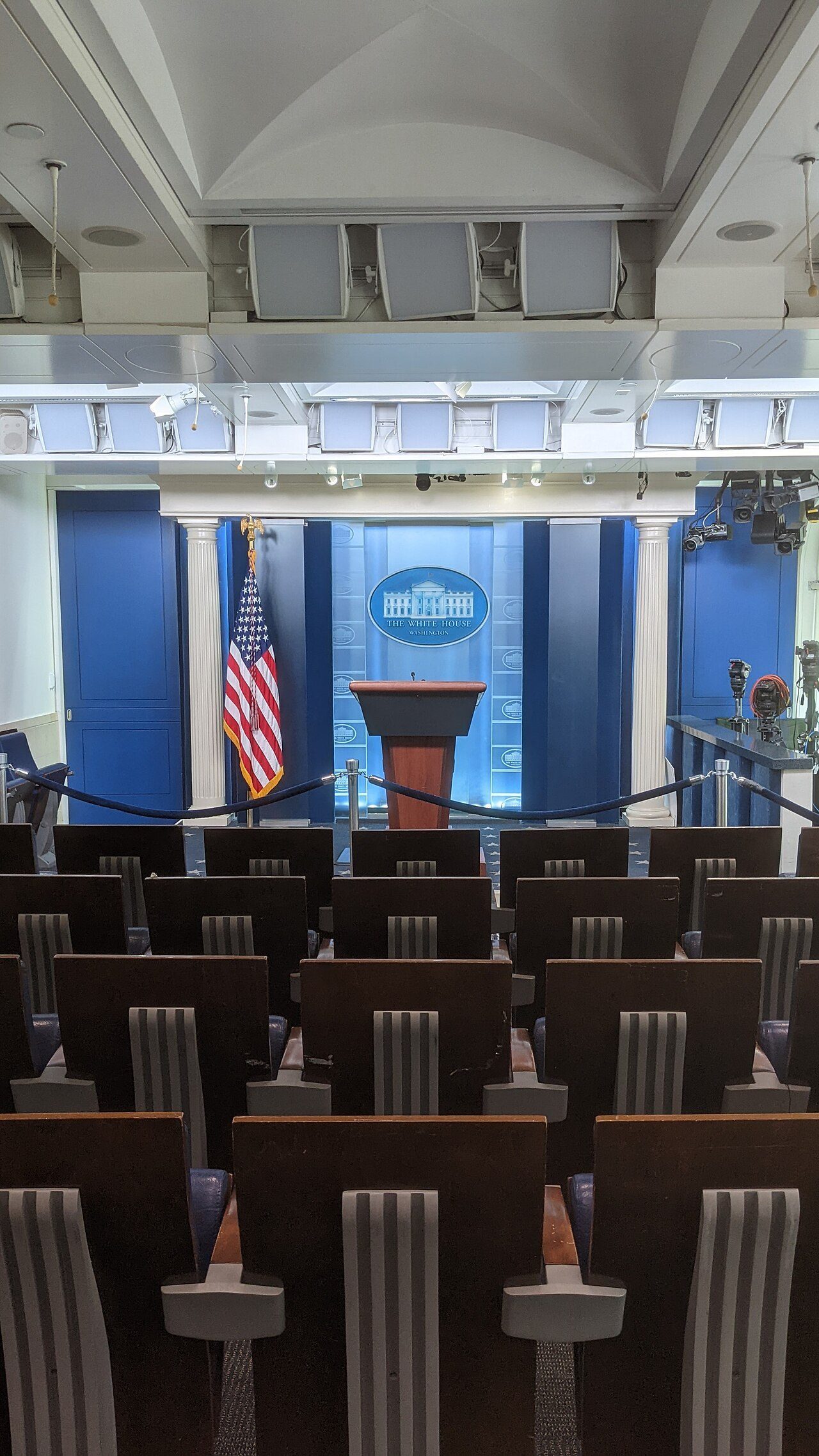
Empty reporters' chairs facing a podium and US flags in the White House briefing room
The empty White House briefing room in 2022. A location reference, not a scene from the 2026 access dispute. CabbageFuel / Wikimedia Commons, CC BY-SA 4.0. · 참고 이미지 / Reference image · CabbageFuel · 출처 / Source · CC-BY-SA · Contributor-declared changes: Owned1280px rendition reimported for English metadata; server recompression only.. PRISM automatically re-encoded with JPEG quality 82; 1280x2276 to 1280x2276 pixels, aspect ratio retained with no upscaling.

The coalition supporting CNN's access lawsuit argues that the harm reaches audiences outside the three excluded newsrooms. In a September 23 friend-of-the-court brief, the Reporters Committee, the White House Correspondents' Association and 49 media organisations asked for temporary relief.

Their argument centres on editorial independence: access to government reporting spaces must not depend on whether the president likes the coverage. The filing also warns that punishing one outlet can deter others from pursuing reporting that risks similar exclusion.

Interpretation

For English-language readers abroad, that matters because reporting gathered in Washington circulates through international outlets and shared news services. The coalition includes Reuters, the Financial Times and Guardian US, alongside American broadcasters and local publishers.

Uncertainty

This is an advocacy filing supporting CNN, MS NOW and Politico, not a court judgment. Its claims explain public-information stakes raised by that coalition.

Adrian Cole프리즘코리아 편집국 > Adrian Cole

Original sources

  1. RCFP, WHCA and49 media organisations, proposed amicus brief ↗
  2. RCFP account of its filing ↗
Report an error ↗

Related stories

World · 2026.10.01

After Ekurhuleni, South Africa sets 60- and 90-day tests for stalled cases

President Cyril Ramaphosa’s response to the killings of women in Ekurhuleni gives police, justice officials and municipalities dated tasks. The first public test is whether case audits, forensic-backlog plans and safety inspections produce verifiable results, while investigators still have not established that one perpetrator committed the deaths.

World · 2026.09.28

Ekurhuleni killings: an arrest, a viral accusation and an unlinked death

South African police have reported an arrest in one Tembisa cemetery killing, rejected an unsubstantiated social-media accusation against another man, and found no preliminary link between a later fatal robbery and the Ekurhuleni cases. Dated official statements show why those separate findings cannot yet be treated as one solved investigation.

World · 2026.09.27

Black Sea grain request preceded Wadephul–Lavrov talks; no joint deal announced

Germany’s foreign minister proposed a Black Sea-first ceasefire at the UN on September 23, then raised grain exports with Russia’s Sergey Lavrov on September 26. The meeting revived direct contact, but the available German and Russian accounts do not establish a shared shipping deal or an implemented ceasefire.