Swift Observatory's Fiery Return Closes a 21-Year Run and Exposes a Hubble Problem
NASA's Neil Gehrels Swift Observatory re-entered over Indonesia on Nov. 4 after solar-driven orbital decay and a failed commercial rescue attempt, raising questions about how long Hubble can last.
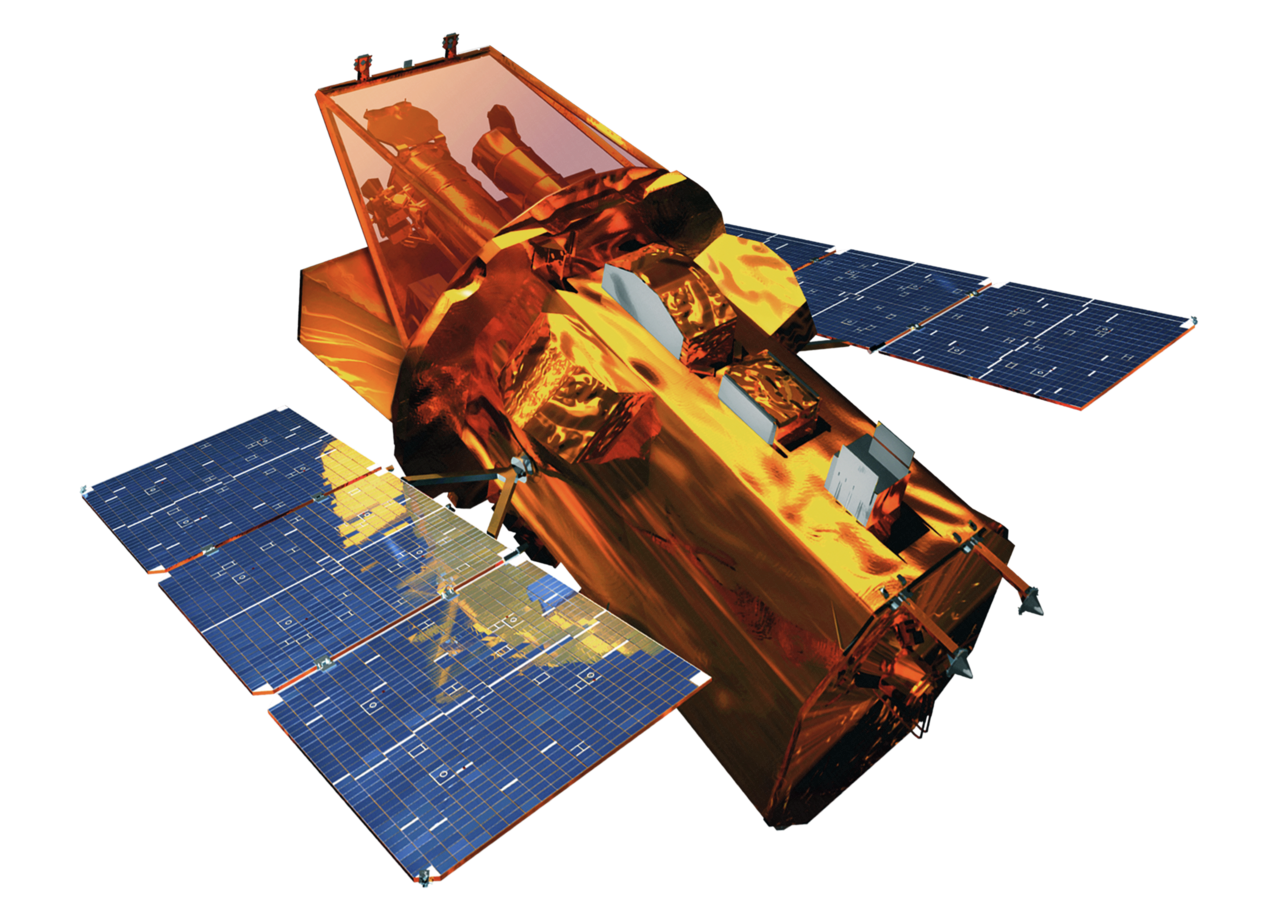
NASA's Neil Gehrels Swift Observatory re-entered Earth's atmosphere at about 7:39 a.m. Eastern time on Nov. 4, 2026, over Indonesia, according to U.S. Space Force data cited by ABC7 News. The spacecraft weighed roughly 3,200 pounds. At the time of reporting, it was not clear whether any surviving debris had reached land.
Swift launched on Nov. 20, 2004, built for a two-year mission, and operated for more than 21 years. Interesting Engineering reports that it observed more than 2,000 gamma-ray bursts, studied over 1,400 supernova explosions, and contributed data to about 7,000 scientific papers.
The end came from orbital decay. Solar activity, which peaked in 2024, heated and expanded Earth's upper atmosphere, increasing drag on low-orbiting satellites. By Oct. 20 Swift had fallen to about 171 miles (275 km), could no longer offset the drag, and entered safe mode. ABC7 says the Penn State team that operates the mission sent the final shutdown command that day, and NASA announced on Oct. 23 that science operations had ended.
A rescue was attempted. NASA contracted Arizona-based Katalyst Space Technologies to build LINK, a robotic spacecraft meant to grapple Swift and raise its orbit, which ABC7 says could have extended its life by a decade or more. LINK was built in about nine months and launched on July 3, 2026, aboard a Northrop Grumman Pegasus XL rocket. An attitude-control problem kept it from capturing or boosting Swift, and in August NASA said the orbit-raising attempt would not go ahead, though LINK would continue rendezvous and proximity-operation demonstrations.
Before re-entry, NASA said the risk of harm to anyone on Earth was unlikely, at approximately 1 in 2,100. That figure was a pre-re-entry estimate, not an after-the-fact finding.
The episode matters beyond one satellite. ABC7 reports that NASA has asked commercial companies for proposals to extend Hubble's life, and estimates a 10% chance that Hubble leaves orbit by 2032 and a 50% chance by 2033, with no replacement expected before the 2040s. Swift's story shows how solar-cycle drag can shorten the life of an expensive science asset faster than a short-schedule commercial fix can be developed. That reading is interpretation; the sources do not say how any Hubble servicing effort would fare.
Some of Swift's science continues. Interesting Engineering says its public archive holds about 12 terabytes, including nearly 22 years of observations and more than 1.5 million Ultraviolet/Optical Telescope images, so archival research can go on even though the instruments are silent. What the sources do not establish is why LINK lost attitude control, whether any debris reached the ground, or whether commercial servicing can actually extend a science satellite's life.
 프리즘코리아 편집국 > Alex Rowan