Nhat Tan Bridge trial changes one car lane's speed limit in each direction
Hanoi's six-month trial lowers the median-side car lane from 90 to 80 km/h while retaining the other lane limits. The temporary removal of distance-warning signs is a separate change, not an announced reversal of the speed scheme.
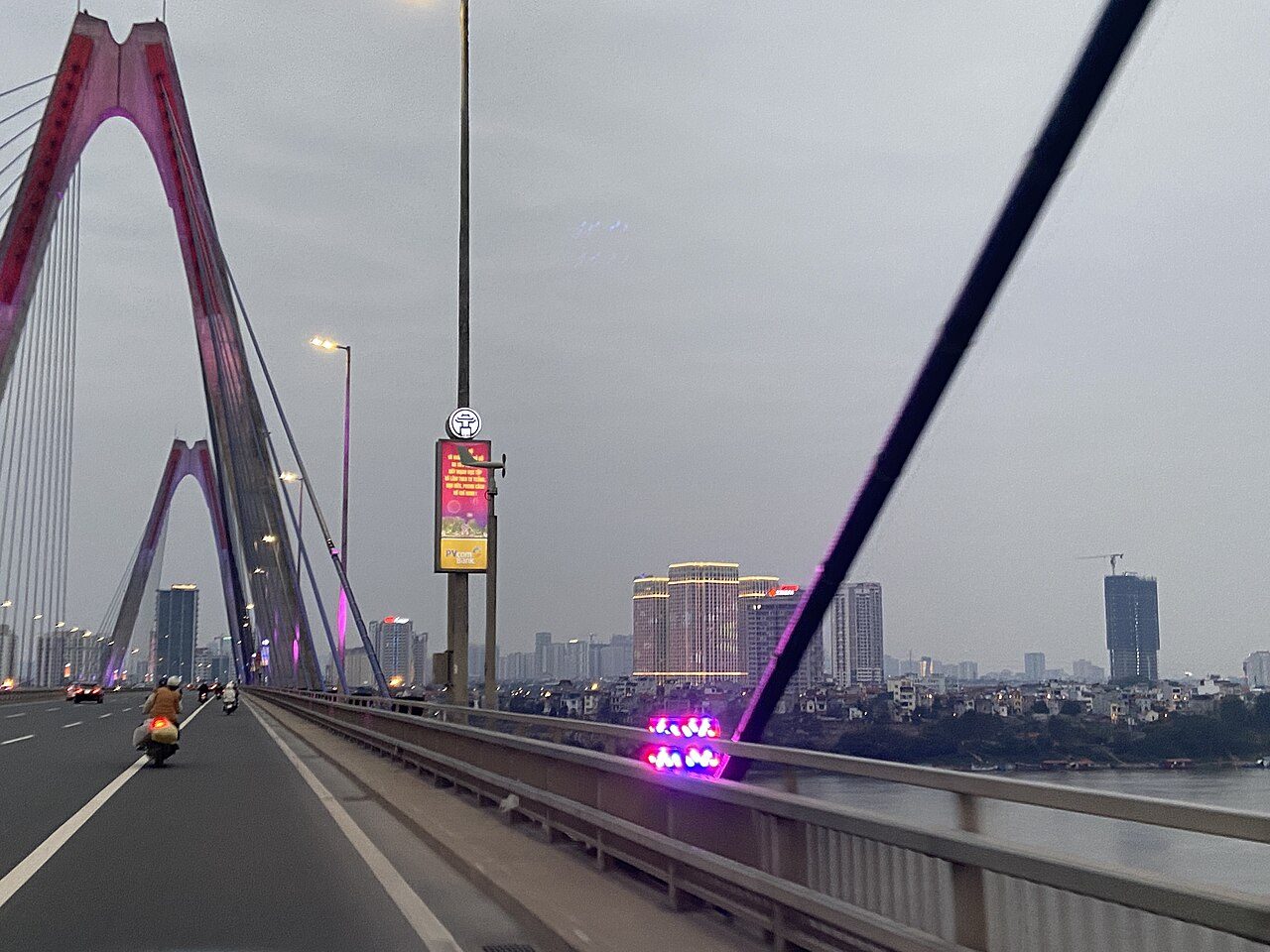
Hanoi's new traffic trial on Nhat Tan Bridge changes the maximum speed in one motor-car lane in each direction, rather than imposing a fresh reduction across every lane. The lane beside the central divider moves from 90 to 80 km/h. The other two motor-car lanes retain their existing 80 km/h limit, while the lane designated for motorcycles and bicycles retains 40 km/h.
That breakdown comes from the Vietnamese government's Hanoi portal, which reported the Construction Department's Notice 1411/TB-SXD on September 25. The trial runs from September 27, 2026 through March 27, 2027. For English-language readers following Hanoi's road network, the lane description matters: the announcement aligns the three motor-car lanes at the same maximum, but does not apply that number to the separate motorcycle-and-bicycle lane.
The implementation plan also reaches beyond the bridge deck. The government's account calls for coordination of nearby traffic signals according to vehicle flows and monitoring of the trial's results. This makes the scheme an operational test whose performance still needs to be assessed, rather than evidence that congestion has already improved.
A separate development on the opening day concerned distance-warning signs. In a September 27 interview with VTC News, a Construction Department leader said the signs were being temporarily removed while officials explained their purpose to road users. The official described them as reminders and aids to judging separation, after drivers expressed concerns about penalties.
That removal should not be read as proof that the speed trial has ended. VTC's report continued to set out the lane-specific limits and six-month timetable, and said existing traffic rules still apply. It did not announce a restoration of the median-side lane's former 90 km/h maximum.
The distinction is useful when comparing photographs or short headlines: a change to one set of warning signs is not a complete account of the operating scheme. The reviewed reports establish the announced limits and the same-day signage adjustment; they do not provide measured collision reductions or a guaranteed travel-time saving.
 프리즘코리아 편집국 > 森川結衣 · Yui Morikawa