2026 ozone hole: "largest in a decade" headline vs. seventh-largest in NASA-NOAA's season wrap-up
NASA and NOAA's November 4 season summary ranks the 2026 Antarctic ozone hole seventh largest in 48 years by seasonal mean area, with a 27.1 million sq km peak on Sept. 18 and a 105 DU low on Oct. 17. Scientists blame a large polar vortex, not new chemistry, and still project recovery by the 2070s.
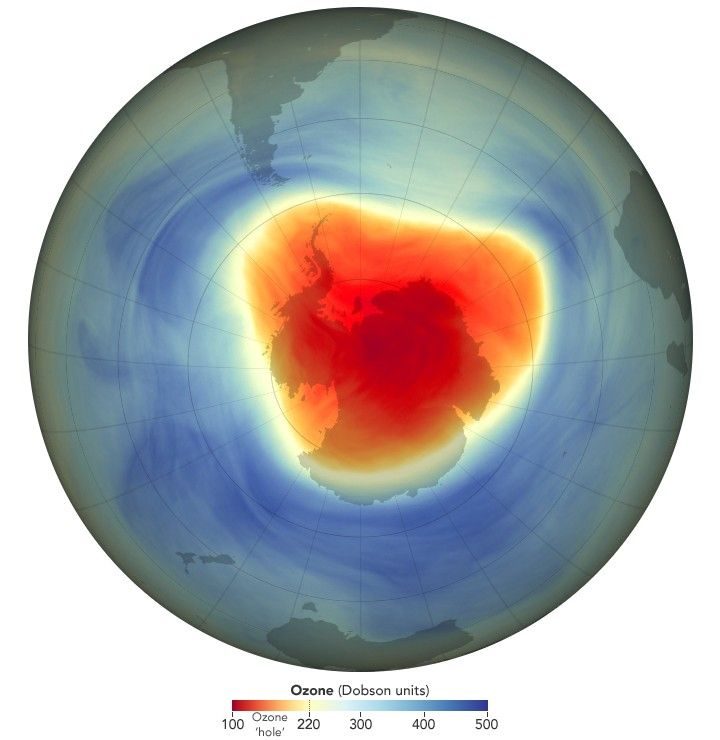
NASA and NOAA published their summary of the 2026 Antarctic ozone-hole season on November 4, and its headline numbers are more modest than some news coverage suggested. The agencies rank the hole seventh largest in 48 years of monitoring, based on the seasonal mean area. It reached its greatest one-day size on September 18, at 10.5 million square miles (27.1 million square kilometers), about 90% of the record set on September 9, 2000. The average for September 7 to October 13 was about 9.6 million square miles (25 million square kilometers), according to NOAA's release.
Depth tells a slightly different story from area. NASA's summary says the hole was not as deep as other large holes on record. Balloon measurements at the South Pole recorded the season's lowest overhead ozone, 105 Dobson units, on October 17; the lowest ever recorded there is 92 Dobson units, in October 2006. Area and depth measure different things, and a large footprint does not automatically mean the thinnest ozone.
The label "largest in a decade" appeared in an ABC News-affiliated report published November 4 by ABC7 San Francisco. Its body text cites the same seventh-in-48-years ranking and does not say which year was last larger, so the headline and the ranking are hard to reconcile from that article alone. The agencies' own releases, as read for this story, do not use the phrase.
The scientists' explanation is about weather. Amy Butler of NOAA's Chemical Sciences Laboratory said weak planetary-scale weather waves in August and September failed to disrupt the polar vortex, which grew unusually large and kept its strongest winds several degrees of latitude from the pole, widening the area where depletion could occur. NASA's release quotes Paul Newman, a longtime leader of its ozone research team, saying an unusually powerful polar vortex extended ozone depletion this season.
The agencies also stress that the chemistry is improving. Newman said the hole has been forming later in the season in recent years, a sign of healing, and estimated that with ozone-depleting substances at their 2000 peak the hole could have been 1 to 2 million square miles larger. NOAA's Stephen Montzka said chlorine from these substances in the Antarctic stratosphere has fallen about a third from its 1980s peak. Scientists estimate the hole will recover by the 2070s, with the Montreal Protocol of 1987 credited for the trend.
There are limits to what one season shows. The release attributes this year's size to meteorology, so it neither signals a setback in recovery nor, on its own, proves progress; that case rests on the multi-decade trend in chlorine levels and the timing of hole formation. These are the agencies' interpretations, and this article has not independently tested them.
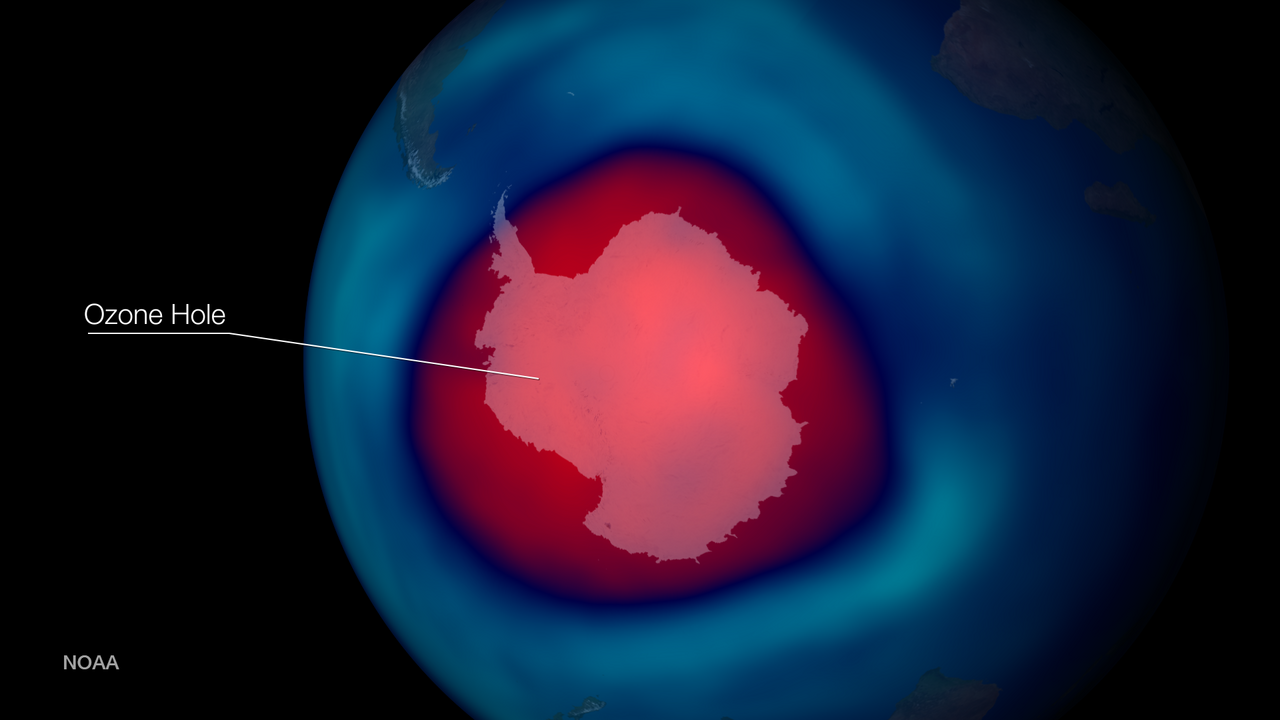
Some questions remain open. The sources do not say exactly when the 2026 hole will close, which depends on the breakdown of the polar vortex later in the southern spring. The "2070s" recovery estimate is given without a definition of the metric it refers to, so it should not be compared directly with other projected dates for ozone to return to 1980 levels. The ABC7 report's "largest in a decade" framing is not explained in its own text. The image shows NASA's map of the 2024 maximum-extent day and is a reference picture, not the 2026 hole.
 프리즘코리아 편집국 > Nguyễn An