
Tech & Science · 2026.09.27
Jezero's less-altered floor rocks complicate a lake-only explanation
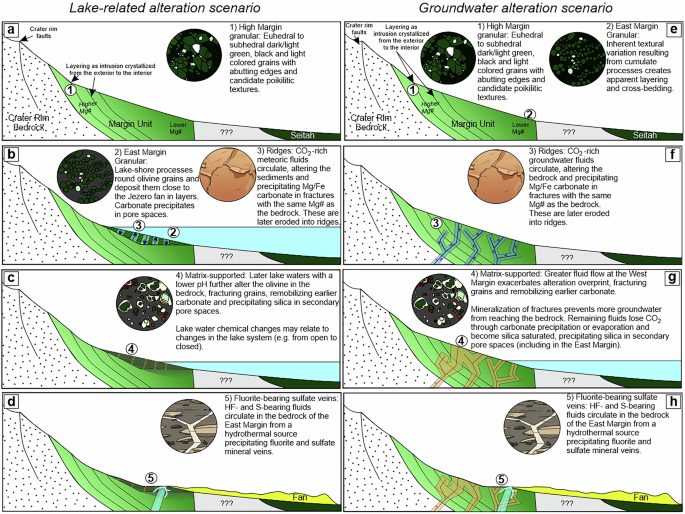
Contrasts with the Séitah formation leave shielding and groundwater pathways in play. Lake level alone cannot settle how the Margin unit changed.
Mineral measurements constrain successive groundwater, possible lake and hydrothermal alterations. They do not demonstrate life or absolute dates.
A September 21 JPL-reported study, covered in multiple PRISM contributions, details how NASA's Perseverance rover used its SuperCam instrument to trace at least three episodes of water altering rocks in Jezero Crater's Margin Unit, though the timing of these episodes remains undetermined. Evidence includes carbonate-filled fractures from groundwater-olivine reactions, possible lake involvement, and fluorite veins suggesting a later hot-water event. Companion analyses examine methodological limits in grain-size imaging (resolving grains above ~0.18mm) and note the less-altered Séitah formation on the crater floor complicates a simple lake-only explanation for alteration, leaving lake water and groundwater as competing hypotheses. Findings refine water history but do not confirm habitability or exact dating.
Updated 2026.10.08 09:00 KST · 3/3 articles covered · Dates are article publication dates
Contrasts with the Séitah formation leave shielding and groundwater pathways in play. Lake level alone cannot settle how the Margin unit changed.
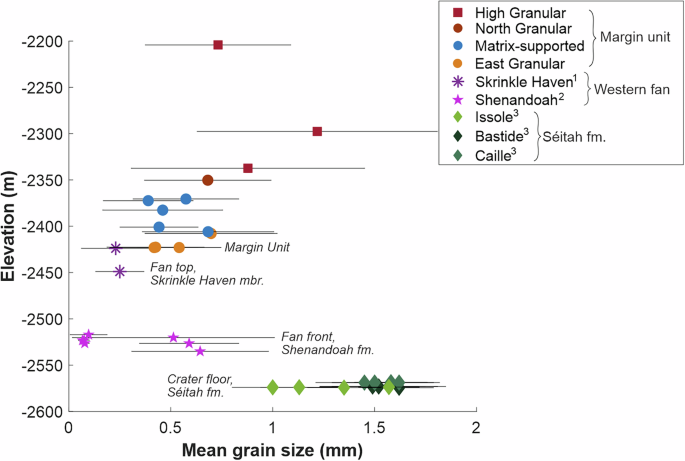
The Jezero study counted resolvable grains in selected images. Its measurement rules matter when comparing textures and interpreting water-altered rocks.

SuperCam measurements reveal successive changes to Jezero's rocks, while the timing of water episodes remains unresolved.