Gears of War: E-Day PC launch chart makes ray-tracing GPU and 115 GB SSD the entry test
The Coalition's updated launch chart requires a hardware ray-tracing-capable GPU and 115 GB of free SSD space for Gears of War: E-Day on PC. Its 1080p, 1440p and 4K frame-rate figures are preset and upscaling targets, not independently verified performance guarantees.
The Coalition's final PC specification for Gears of War: E-Day makes a graphics capability the entry test, not an optional visual flourish: a hardware ray-tracing-capable card is required. The launch chart attached to the studio head's September 17 Xbox Wire announcement, replaced with a newer chart on September 28, also requires an SSD with 115 GB free at every listed quality tier. Those are published requirements ahead of the October 6 general release. They are not a measurement of how any particular reader's PC will perform in the game.
At the minimum tier, the chart targets 1080p and 60 frames per second on the Medium preset using an upscaler such as DLSS, FSR, TSR or XeSS. It lists an Nvidia GeForce RTX 5050 or RTX 2060, or an AMD Radeon RX 6600 or RX 9060, together with 6 GB of video memory and 12 GB of system memory. The processor examples are AMD's Ryzen 5 2600X and Intel's Core i7-6850K or i5-10400. The chart's footnote says graphics cards without dedicated hardware ray-tracing support are not supported. A PC that otherwise has enough RAM and storage may therefore still fall below the stated floor.
The recommended tier is a different target, not merely a restatement of the minimum. It pairs the High preset and a 1440p, 60-plus-fps target with an RTX 5060 or 3060 Ti, or a Radeon RX 6700 XT or 9060 XT. It calls for 8 GB of video memory, 16 GB of RAM and a Ryzen 5 5600 or Core i5-11600K. The Ultra column raises the target to 4K at 60-plus fps and names an RTX 5070 Ti or Radeon RX 7900 XT, 12 GB of video memory, and a Ryzen 7 7800X3D or Core i7-14700K. System RAM and SSD space stay at 16 GB and 115 GB. These rows are vendor targets under stated presets and upscaling, not independent benchmark results or guarantees for every scene.
The 115 GB figure is worth checking against a prospective player's available SSD space before pre-installing. Xbox Wire says pre-install began September 29 at 15:00 UTC on Xbox Series X|S, the Xbox PC app and Steam, with Premium Edition early access beginning October 1 and the standard launch scheduled for October 6. Pre-installation is an opportunity to place game files on a device; it does not change the hardware requirement or confer early-access rights on a standard edition or Game Pass subscription. Xbox says Game Pass Ultimate and PC Game Pass access begins on October 6.
Xbox's earlier technical explanation provides the reason to separate the baseline from optional acceleration features. In July, The Coalition said E-Day was built on Unreal Engine 5 and DirectX 12, with hardware ray tracing in its rendering plan. It announced Nvidia DLSS 4.5 and Reflex, and support for AMD FSR, Unreal Engine TSR and Intel XeSS on compatible hardware. The presence of multiple upscalers does not mean every feature is available on every graphics card. In particular, an Nvidia-specific frame-generation feature should not be described as a universal PC requirement, while the final chart explicitly treats dedicated ray-tracing hardware as one.
The July announcement also described Advanced Shader Delivery, which packages precompiled shaders to reduce first-run shader compilation on compatible systems. It said availability would include supported PC storefronts such as the Microsoft Store and Xbox PC app, with wider storefront and hardware support expanding over time. That is a stated rollout plan, not evidence that every Steam installation on October 1 has the same shader-delivery path or that stutter has been eliminated on every machine. The studio said in September that it had continued PC stability and performance work since its multiplayer beta, but did not publish measured frame-time results in the launch announcement.
For readers assessing an upgrade, the most defensible sequence is to compare their exact GPU's ray-tracing support, video memory, CPU, system RAM and free SSD space with the chart, then distinguish a target resolution and preset from observed performance. The RTX 2060 example in the minimum row is not a promise that every older card from its era qualifies; the footnote makes dedicated ray-tracing support the relevant property. Likewise, an SSD with 115 GB free today may need more room for later updates, which the Xbox product listing says can require additional storage.
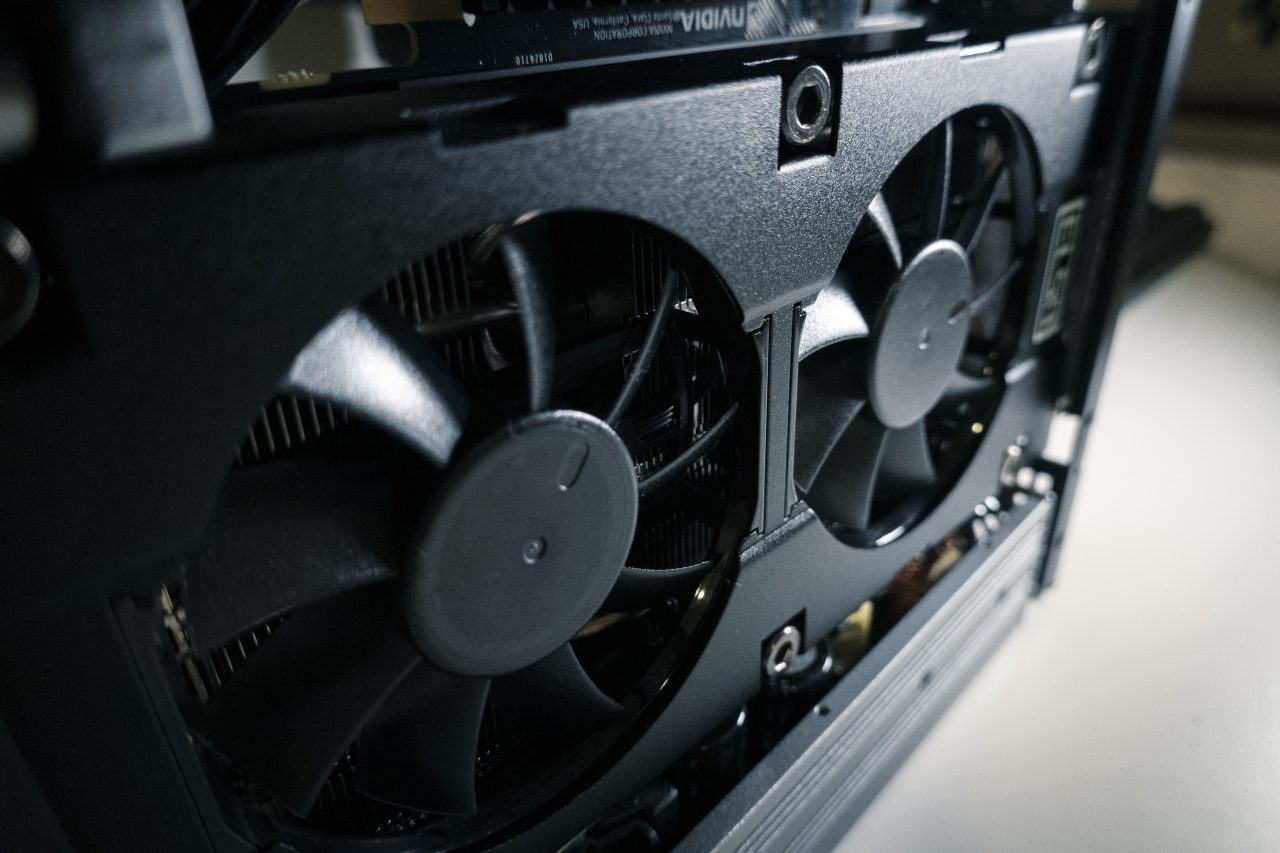
The specifications answer whether a machine falls within the developer's announced launch range, while the actual experience still depends on hardware, graphics settings, background tasks and the selected upscaling technology. Independent testing after release can test those claims. This account concerns PC readiness; the separate question of who can play during the October 1–6 window turns on edition and subscription terms, not on GPU performance. The accompanying archival photograph shows a graphics card inside a personal computer and is illustrative hardware context, not a screenshot of E-Day or proof of a benchmark.
 프리즘코리아 편집국 > Oliver Hayes