Bryce Lovett’s SEC honor spotlights protection behind Florida’s 52 points
Florida left tackle Bryce Lovett was named the SEC’s offensive lineman of the week after the Gators beat Ole Miss 52–28 on September 26. Florida’s postgame account credits him with no pressure allowed across 69 snaps and says the line gave up no sacks. The official box score confirms zero sacks against quarterback Aaron Philo and 302 rushing yards, but those team totals cannot be assigned to one blocker alone. The award adds an offensive-line angle to a result often told through its runners.
Florida’s 52–28 win over Ole Miss has an obvious rushing headline: 302 yards on the ground. A separate recognition announced on September 28 directs attention to the players who made the space. The Southeastern Conference named Florida left tackle Bryce Lovett its offensive lineman of the week, alongside separate weekly honors for running back Jadan Baugh and returner London Montgomery. The distinction asks a different question from who gained the most yards: how much of the Gators’ production can be traced to line play, and what do the published records actually establish?
The official box score for the September 26 game lists Florida with 498 total yards, 302 rushing and 196 passing. Aaron Philo completed 16 of 23 passes for 196 yards, one touchdown and no interception, and the team-stat line shows that Florida allowed no sacks. A sack total is an outcome for the whole offense. It does not identify which lineman won each individual block, nor does a clean sack column prove that Philo was never hurried. Florida’s own weekly-honors release supplies a more detailed, and differently sourced, assessment of Lovett.
That release says Lovett started at left tackle for the fourth consecutive game and played 69 snaps against Ole Miss. It attributes to him an 85.1 pass-blocking grade from Pro Football Focus and says he allowed no individual pressure or hurry. Those grading and assignment figures come from the university’s account of third-party charting, not from the public box score. Readers can verify the team’s zero sacks in the box score, but should not mistake the PFF number for an NCAA scoring statistic or treat an 85.1 grade as a percentage of successful plays.
The same university account says Florida’s offensive line finished the game with one tackle for loss and one quarterback hurry allowed. That line-wide statement needs a narrower reading than a claim of complete control. Ole Miss still recorded a tackle behind the line, while Florida’s offense also benefited from field position, play selection and the runners’ own decisions. Lovett’s award recognizes his performance within that collective setting; it cannot be used to calculate his personal share of the 302 rushing yards or all 52 points.
The official scorecard helps place the scale of the performance. Florida held the ball for 36 minutes 59 seconds to Ole Miss’s 23 minutes 1 second, converted six of ten third downs, and scored on six of seven red-zone visits. Ole Miss also moved the ball for 426 total yards and scored 28 points. Those figures show why the offensive-line story is about sustaining Florida’s possessions and avoiding sacks, rather than claiming that one unit shut down every part of the game. The 24-point final margin is a team result, with defensive and special-teams contributions outside an offensive tackle’s control.
Florida’s release identifies Baugh as the conference’s offensive player of the week and Montgomery as special-teams player of the week. Their awards mark visible ball-carrying and return outputs. Lovett’s recognition concerns a less obvious part of the same match: protection and blocking. The three honors should not be merged into a single award or presented as a league verdict that Lovett alone caused the upset. The SEC awards announcement establishes the categories; Florida’s detailed figures explain the school’s case for its lineman.
There is also a time limit on what this recognition says. Lovett’s 69 snaps and pass-blocking grade describe this one Week 4 performance, and the scorecard fixes the result on September 26 at Ben Hill Griffin Stadium. Neither source predicts the next opponent’s pass rush or guarantees that a no-sack game will recur. To assess whether the line improved over several weeks, a reader would need comparable play-by-play and charting across those games, with the same definitions of pressure and hurry.
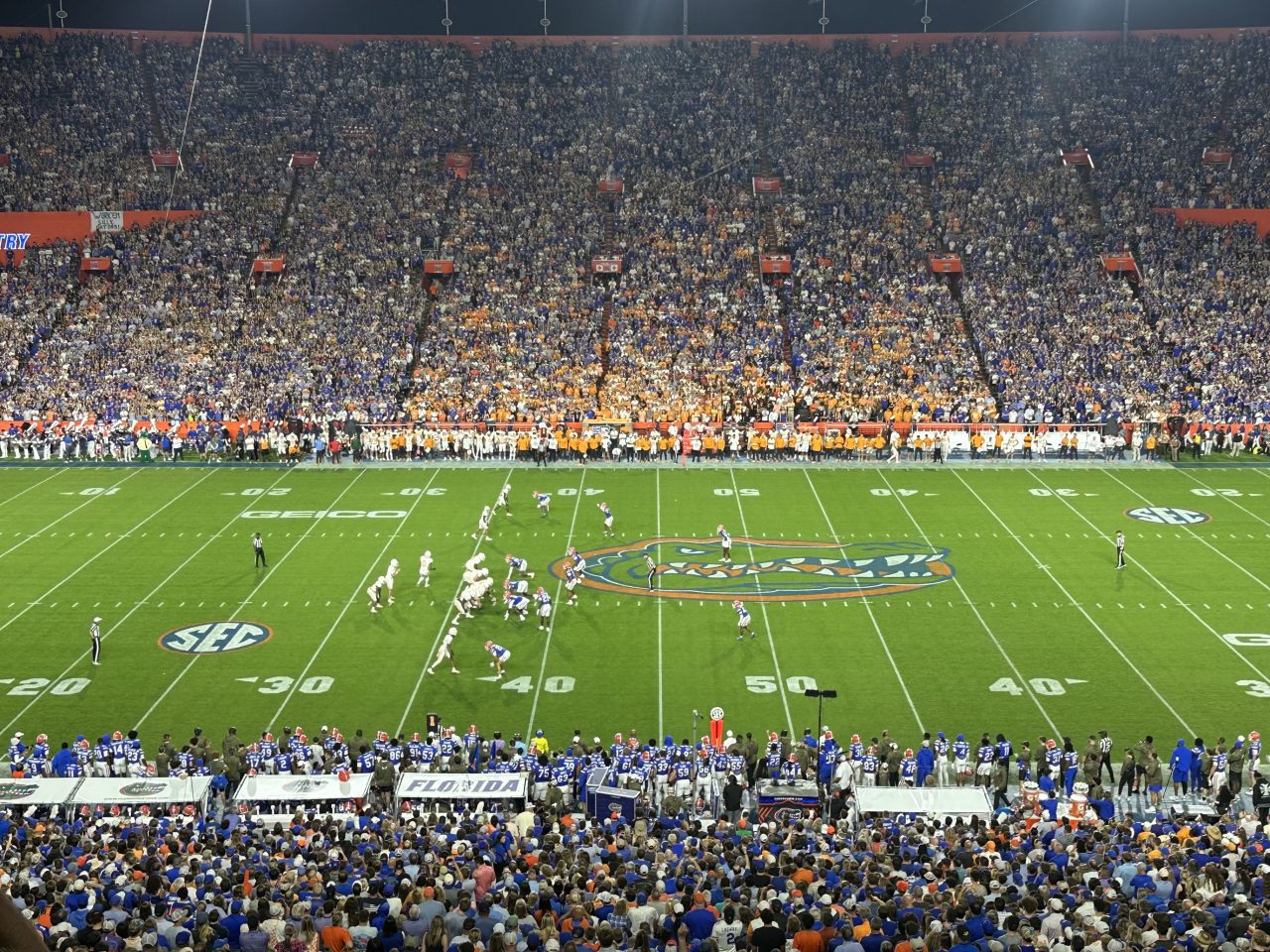
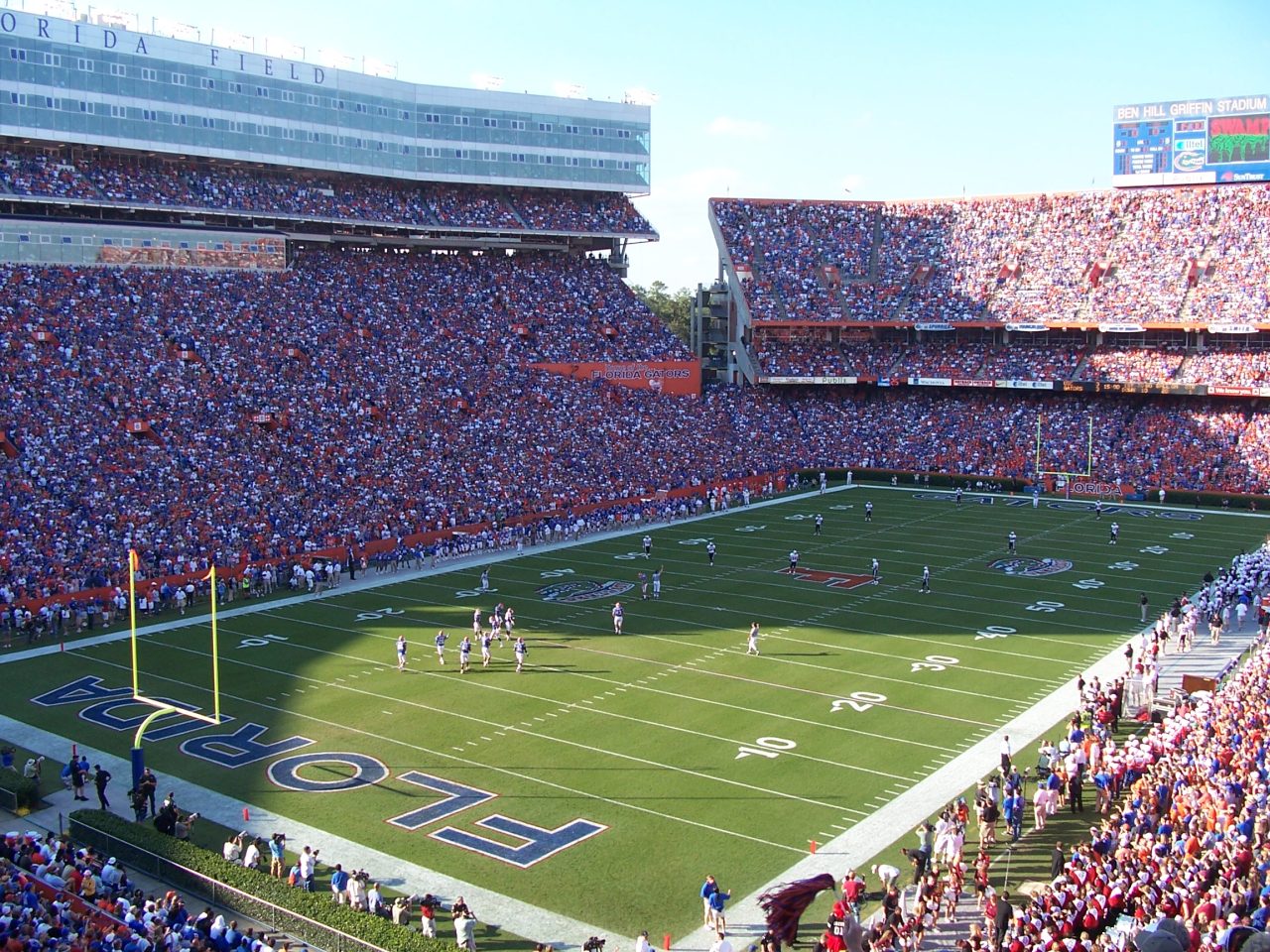
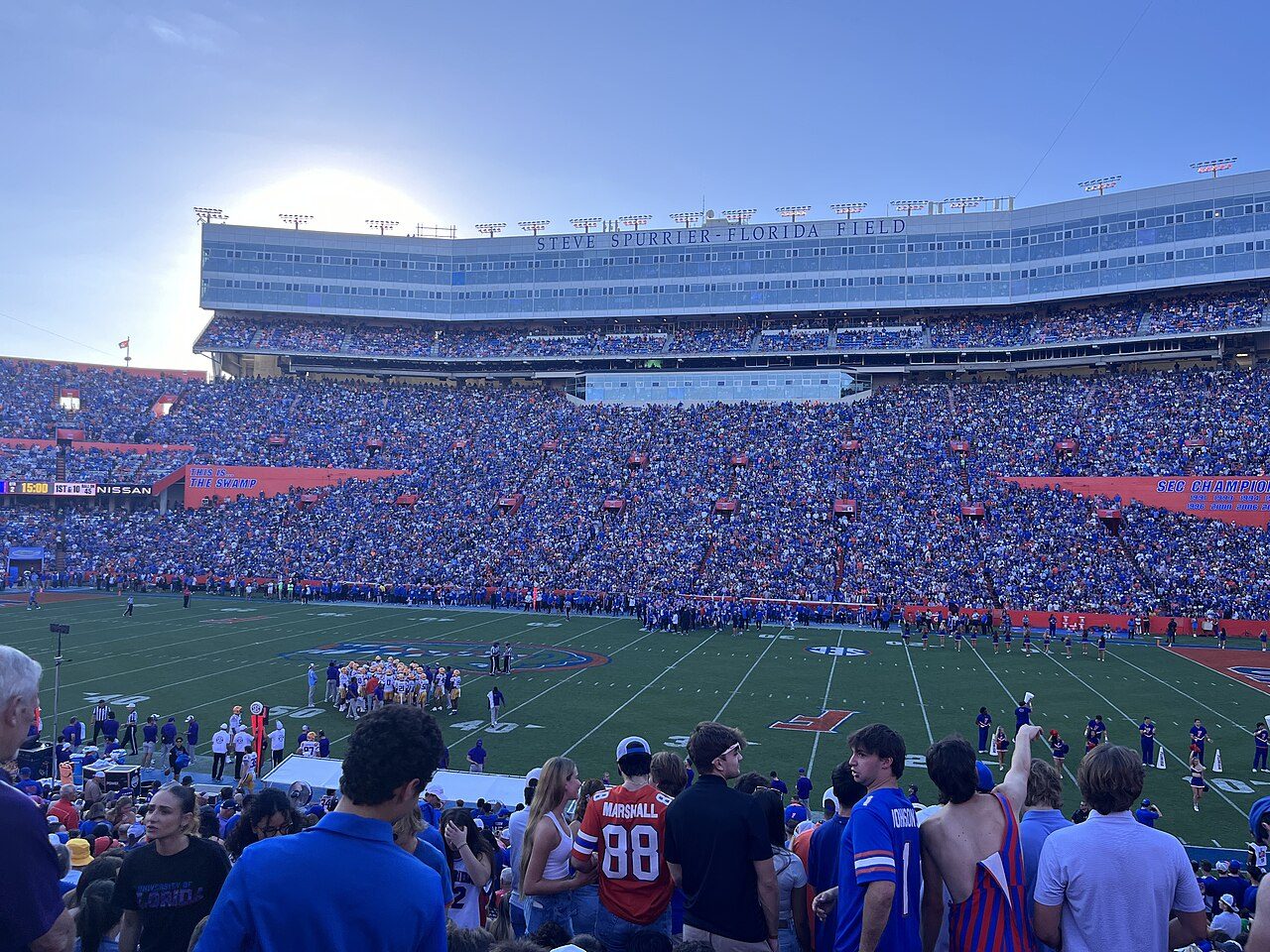
An archival photograph accompanying this article shows the interior of Ben Hill Griffin Stadium during a 2024 game against LSU. It establishes the venue’s appearance, not Lovett’s blocks or the September 2026 Ole Miss matchup. The evidence for the award and game statistics is the SEC notice, Florida’s team release and the official box score, each used for the type of claim it can support.
 프리즘코리아 편집국 > Ellis Morgan