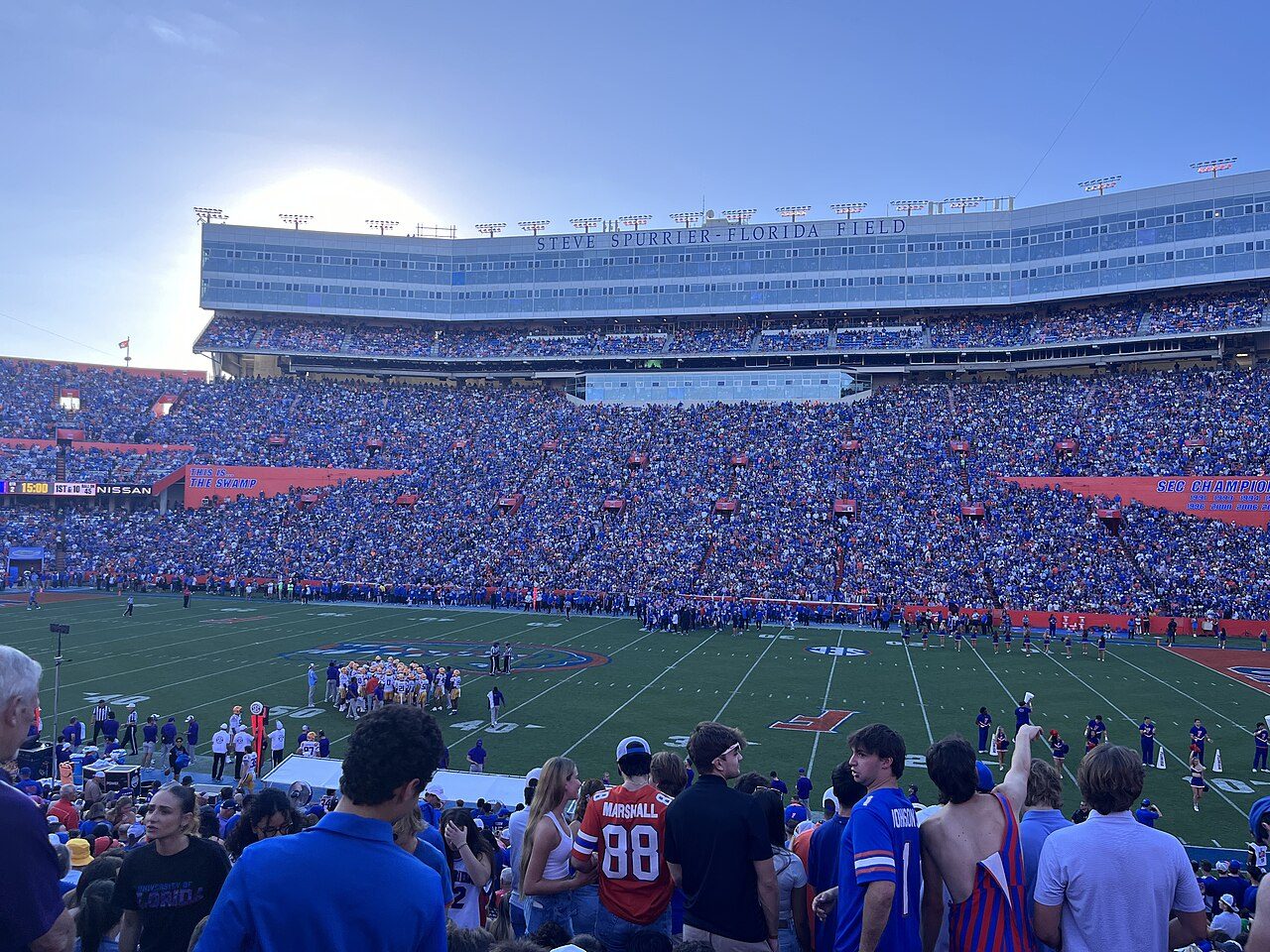
Baugh and Clark supplied 268 of Florida’s 302 rushing yards against Ole Miss
Florida’s 52–28 win over Ole Miss was built on 302 net rushing yards across 53 team attempts. Jadan Baugh gained 142 on 29 carries and scored three rushing touchdowns, while Duke Clark gained 126 on 12 carries and scored once. The official play-by-play shows two different contributions: Baugh finished longer possessions near the goal line, and Clark’s 45-yard run answered a third-quarter Ole Miss touchdown. Those figures describe this game, not a forecast of future rushing efficiency.
Florida’s 52–28 victory over Ole Miss on September 26 is easy to describe as a 302-yard rushing day. The individual and drive records make the more useful question narrower: how did two runners account for most of that ground production, and when did their carries change the score? The official Florida box score credits Jadan Baugh with 142 net yards on 29 attempts and three rushing touchdowns. Duke Clark added 126 yards on 12 attempts and one touchdown. Together they gained 268 of the Gators’ 302 net rushing yards, about 89% of the team total. That percentage is a calculation from the published box score, not a separate statistic issued by the team.
Their workload was markedly different. Baugh’s 29 carries averaged about 4.9 yards; Clark’s 12 averaged 10.5. Those averages alone do not prove that one runner was more effective at the same assignment. Down, distance, field position and blocking vary from play to play, and Clark’s long gains heavily influence his smaller sample. Florida ran the ball 53 times as a team for 302 net yards, an official average of 5.7 per attempt. The remaining rushing attempts and yards belonged to other players, including quarterback Aaron Philo; Baugh and Clark did not produce the entire ground game by themselves.
The opening possession shows Baugh’s role in constructing a drive rather than simply finishing it. The play-by-play records his 12-yard and 23-yard gains as Florida advanced from its own 35 toward the Ole Miss end zone. He later scored from four yards out to cap an eight-play, 65-yard drive. In the second quarter, a much longer possession started at Florida’s 13. It lasted 15 plays and 87 yards before Baugh’s two-yard touchdown put the Gators ahead 17–3. Florida led 17–6 at halftime, so these two short scoring runs were attached to possessions that had already required sustained movement.
Clark supplied a different answer after Ole Miss narrowed the margin. The Rebels scored a touchdown and two-point conversion early in the third quarter, cutting Florida’s lead to 17–14. On the ensuing Florida possession, Clark broke a 45-yard touchdown run. The four-play, 59-yard drive took one minute 23 seconds and moved the score to 24–14. Ole Miss closed to 24–21 later in the quarter, but Florida answered with a Philo rushing touchdown. Clark’s run was therefore an immediate response to the first comeback, not the final score that settled every subsequent exchange.
The box score also records Clark gaining 44 yards on a fourth-quarter carry during a drive that ended with a five-yard touchdown pass from Philo to Amir Jackson. That long run produced field position but is not another Clark touchdown. Baugh’s third rushing score came later, from two yards with four minutes remaining, to set the final 52–28 margin. Distinguishing who gained the long yards from who crossed the goal line avoids turning one player’s drive contribution into another player’s scoring credit.
Florida’s team total included six rushing touchdowns. Baugh’s three and Clark’s one account for four; Philo and Dallas Wilson scored the other two. The Gators also passed for 196 yards, and their offense ran 76 total plays. The contrast between 302 rushing and 196 passing yards describes a game plan visible in the result, but the official numbers do not isolate why Ole Miss could not stop particular runs. They establish production and sequence; they do not by themselves assign causal shares to a runner, a blocker or a defensive call.
Florida’s athletics department says Baugh and Clark were the first Gators pair to exceed 100 rushing yards in the same game since a 2022 contest against South Carolina. The school also reported Baugh’s SEC offensive player of the week honor. Those claims provide context for the pair’s output, while the official box score remains the primary record for the September 26 yardage and scoring. Existing reporting on this issue has examined Florida’s defensive takeaways and left tackle Bryce Lovett’s blocking recognition. This account focuses on the two runners’ distinct workload and the timing of their scoring possessions.
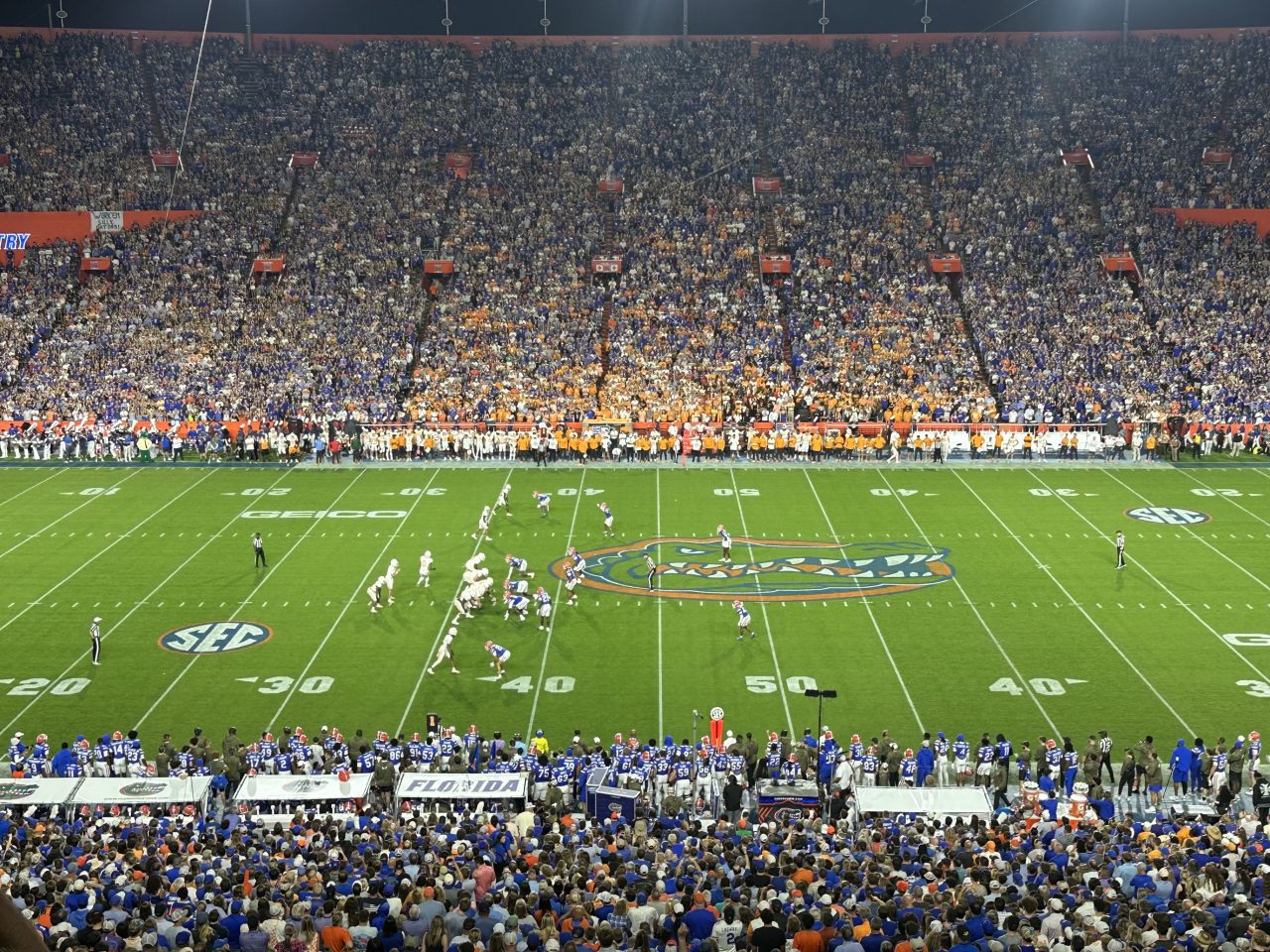
There is a limit to projecting from a single afternoon. A 10.5-yard average over 12 carries cannot be carried into another opponent or converted into an expectation for a full season. Ole Miss gained 426 total yards and scored 28 points, so Florida’s rushing output was not the only force shaping the match. The accompanying archival photograph shows Ben Hill Griffin Stadium during a Florida–Tennessee game in November 2025. It identifies the venue, not Baugh or Clark in the 2026 Ole Miss game.
 프리즘코리아 편집국 > Ellis Morgan