After Tsuda voice ruling, Japan's actors' union checklist puts AI contracts in focus
Japan's actors' union had already urged performers to check six issues in AI voice contracts, including training, reuse, pay and data storage, before the Tokyo District Court ruled in Kenjiro Tsuda's TikTok case. The court recognized a conditional publicity-rights principle for voices but dismissed the deletion request because the videos were gone; it did not decide that this particular audio infringed his rights.
The Tokyo District Court's September 30 decision in voice actor Kenjiro Tsuda's case arrives after Japan's performers' union had already issued a practical warning about AI voice contracts. In February, the Japan Actors Union asked voice actors, agencies and production companies to make the terms of any proposed voice-data use explicit before signing. The judgment and the union notice address different questions: one concerns a request to remove videos already posted to TikTok; the other concerns consent and payment before a recording is reused.
The union's first question is whether a recording will be used to train an AI system at all. Its notice then asks performers to check whether secondary uses or reuse are contemplated, the conditions and duration of use, the initial fee, any secondary remuneration and the basis for calculating it, and how the data will be stored and managed. These are the union's stated points for contract discussions, not clauses newly imposed by the court. For an actor whose performance can be transformed into future narration, a one-time recording fee does not by itself answer where a model output may appear later.
Tsuda's lawsuit illustrates why the distinction matters. The court's published judgment identifies him as an actor, voice actor and narrator and records his role as Kento Nanami in Jujutsu Kaisen. It says an unidentified account posted 188 videos from July 2024 through September 2025, combining images, subtitles and narration about urban legends and supernatural subjects. Tsuda argued that the narration resembled his distinctive voice and that the account benefited from its audience appeal. TikTok disputed both the asserted similarity and its own obligation to remove the posts. The judgment records those positions; it does not establish that Tsuda's recordings were used to train the system.
The court said a person's voice, like a portrait, can symbolize that person's identity. It reasoned that unauthorized use of a performer's voice may infringe publicity rights where the voice has commercial drawing power and the use is exclusively aimed at exploiting that power. Yet it rejected Tsuda's request to order deletion. The account holder had deleted the account on May 29, 2026, and the court found the relevant data had been removed from TikTok's servers by June 28. Because there was no remaining material to order TikTok to delete, the judges did not decide the other contested questions, including whether this particular narration infringed Tsuda's rights. A broad description of the case as a finding that TikTok used a proven clone would go beyond the ruling.
For production agreements, that procedural outcome leaves the union's earlier checklist relevant. The union warns that once voice data has been trained into a model and circulated, complete removal may be impossible. It urges managers in particular to seek a clear account of training, reuse, term, compensation and data controls. That is the organization's risk assessment, rather than a factual finding about the model in Tsuda's litigation. The notice also says the union was developing broader AI guidance; its February text should not be presented as a court order or as a finished statute.
Japan's Ministry of Justice began a separate review of civil liability for unauthorized use of likenesses and voices in April and published its interpretive report in August. The ministry describes uncertainty over when existing publicity-rights and other civil-law principles apply to generative AI and discusses remedies and damages. That policy work provides context for the September judgment, but the report did not adjudicate Tsuda's videos. Likewise, the district court's ruling did not settle how every actor's voice should be licensed, what a fair secondary fee is, or how a producer must technically store voice data.
For English-speaking audiences following anime and dubbing across borders, the immediate lesson is a documentary one: identify the actual use licensed, the reuse window, payment terms and controls over a recording before treating a voice performance as training material. Those questions come from the performers' own published guidance. The court's narrower contribution is that a voice can fall within publicity-rights analysis under stated conditions, while the requested deletion in this case failed because the posts were already gone. Whether future performers can obtain another remedy will depend on the facts and claims in those cases, not on a victory that this plaintiff did not receive.
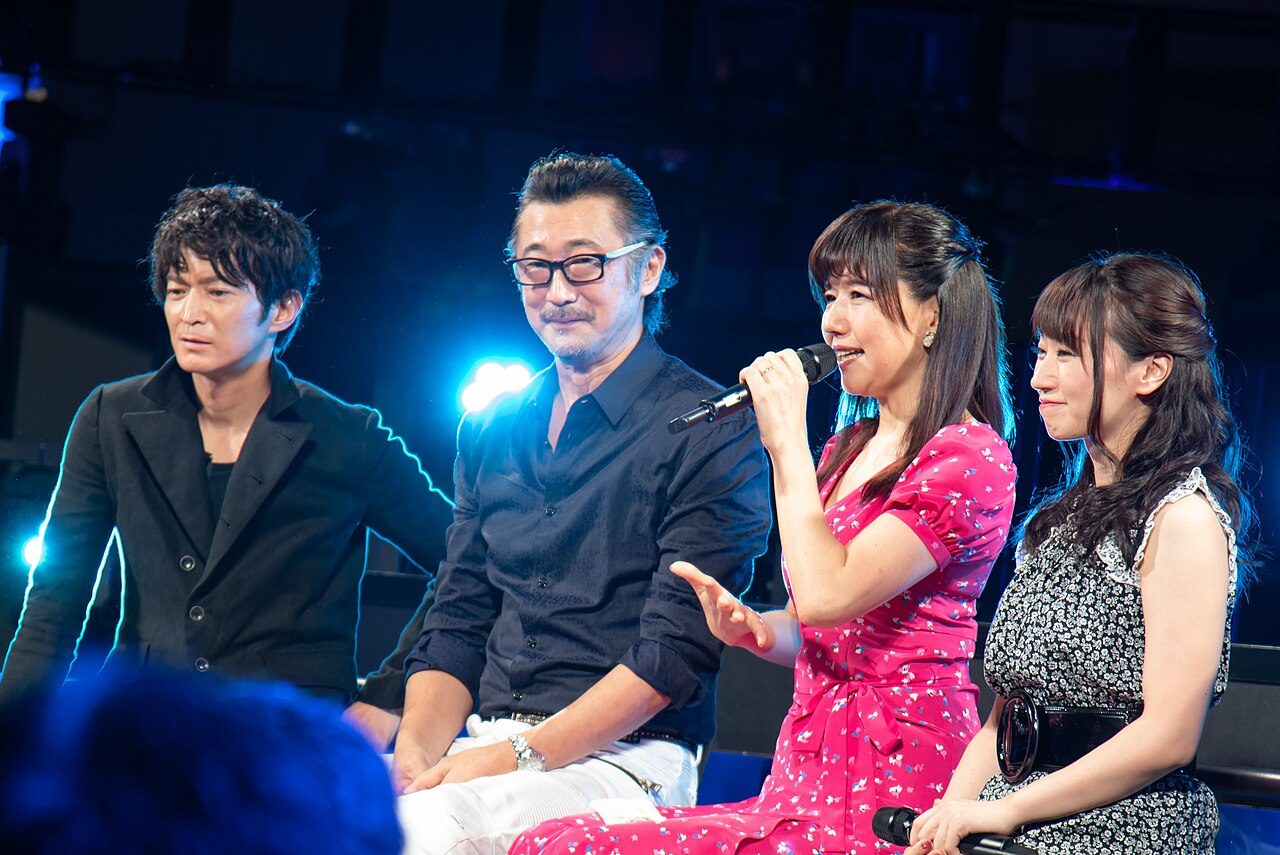
The accompanying image shows Tsuda with fellow voice actors at a 2018 Tokyo Game Show panel. It is archival context, not a photograph of the 2026 hearing, a disputed TikTok video or a demonstration of the audio technology at issue.
 프리즘코리아 편집국 > Maya Collins