Why Austin Wells kept his double when the Rays threw him out at third
Austin Wells ended Tampa Bay's no-hit bid in ALDS Game 1, but his attempt to reach third produced the inning's final out. The official record separates the two-base hit from the subsequent relay play.
Austin Wells broke up Drew Rasmussen's no-hit bid and made the third out of the eighth inning on the same play. Those results coexist in Major League Baseball's official record of Tampa Bay's 1–0 victory over the Yankees in ALDS Game 1 on October 3. Wells was credited with a double, while the Rays completed a relay to retire him at third.
The sequence matters. The top of the eighth began with groundouts by Jazz Chisholm Jr. and Trent Grisham. With two outs and no runner on base, Wells drove the ball to right field. MLB's play-by-play identifies the hit as a double and then lists the throw from right fielder Victor Mesa Jr. through shortstop Taylor Walls to third baseman Junior Caminero. No run scored, and the out ended New York's inning.
The official event data supplies two separate runner movements. In the first, Wells reaches second and is not recorded as out. In the second, he starts from second, is retired at third and is assigned out number three. The hit label therefore describes what he achieved safely before the defense stopped his further advance. Reading only the final destination would lose that sequence.
The distinction also explains why the play was not a triple. Wells did not reach third safely, and the final scoring entry credits two bases. Rule 9.06 of the 2025 Official Baseball Rules, the edition linked from MLB's current glossary, explains how base-hit value is determined and addresses cases in which a batter-runner is retired while advancing. Its treatment of safe progress and subsequent outs helps explain why a hit is not automatically erased when the same batter later makes an out. This article does not infer that Wells overslid a base; the event record describes an attempt to stretch the hit.
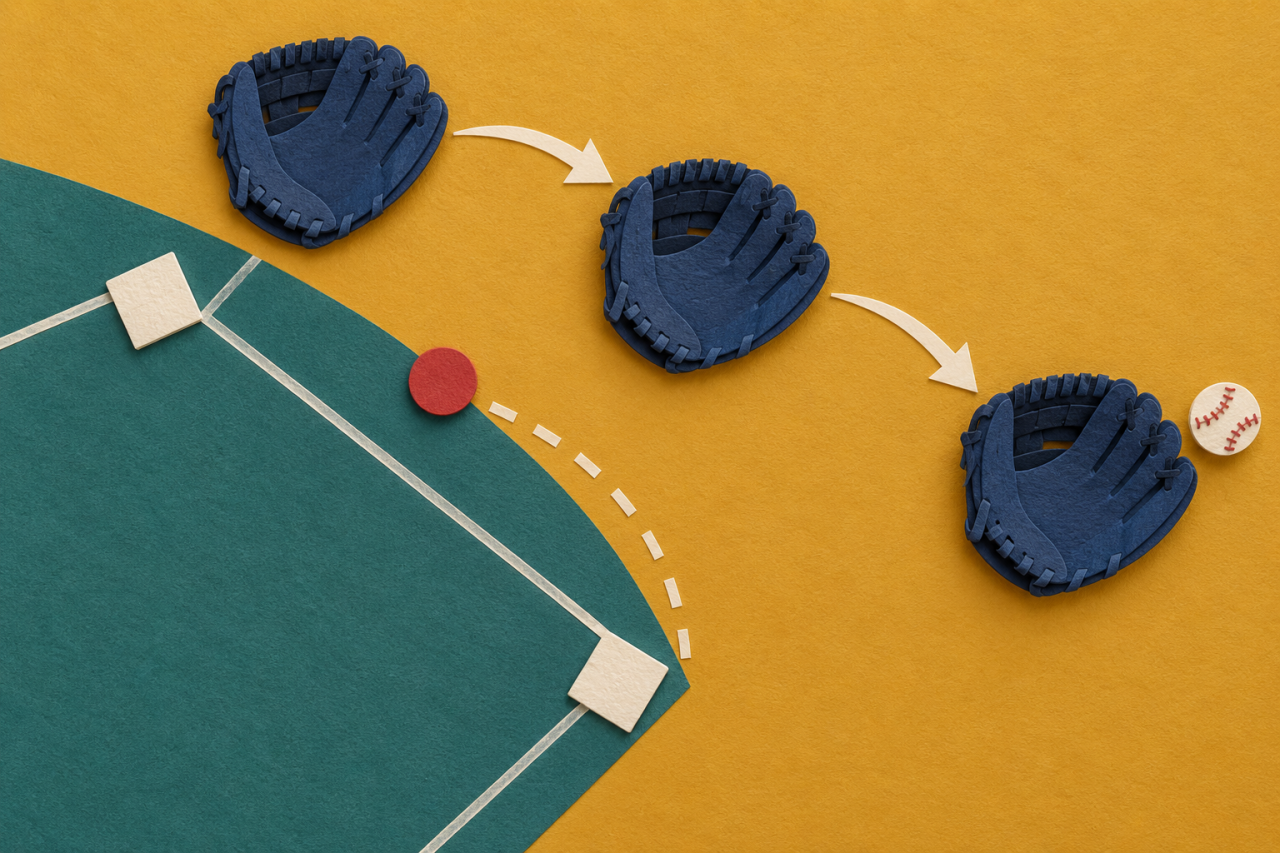
Defensive credit is similarly specific. The runner-out entry awards assists to Mesa and Walls and the putout to Caminero. Their fielding positions correspond to the familiar 9–6–5 relay notation: right field, shortstop and third base. That notation describes the players handling the ball, rather than three outs. Here the defense recorded one out, which was the third of the inning.
The double still changed Rasmussen's pitching line. He finished eight innings with one hit allowed, no runs, 10 strikeouts and two walks. The relay preserved the shutout inning without restoring the no-hit bid. Bryan Baker then worked the ninth, when New York failed to add another hit. Tampa Bay's team total of one hit allowed and Wells's individual double therefore remain consistent with the final 1–0 score.
The record establishes where the hit ended and who completed the out. It does not establish whether Wells followed a coach's instruction, what he believed about the throw or how a different baserunning decision would have changed the game. Those questions require evidence beyond the scoring log. For readers checking an unusual postseason line, the reliable explanation is the recorded order: a safe two-base hit, an unsuccessful further advance and an inning-ending relay.
The accompanying AI-generated paper-collage illustration represents a relay and movement between bases. It is explanatory artwork, not a photograph or reconstruction of the play.
 프리즘코리아 편집국 > Adrian Navarro