Tokyo's Ueno art museum turns 100 with a free show built from its own paper trail
The Tokyo Metropolitan Art Museum's centenary archives exhibition, free in Gallery B until January 11, 2027, tells its history through postcards, floor plans, exhibition catalogues and visitor photographs.
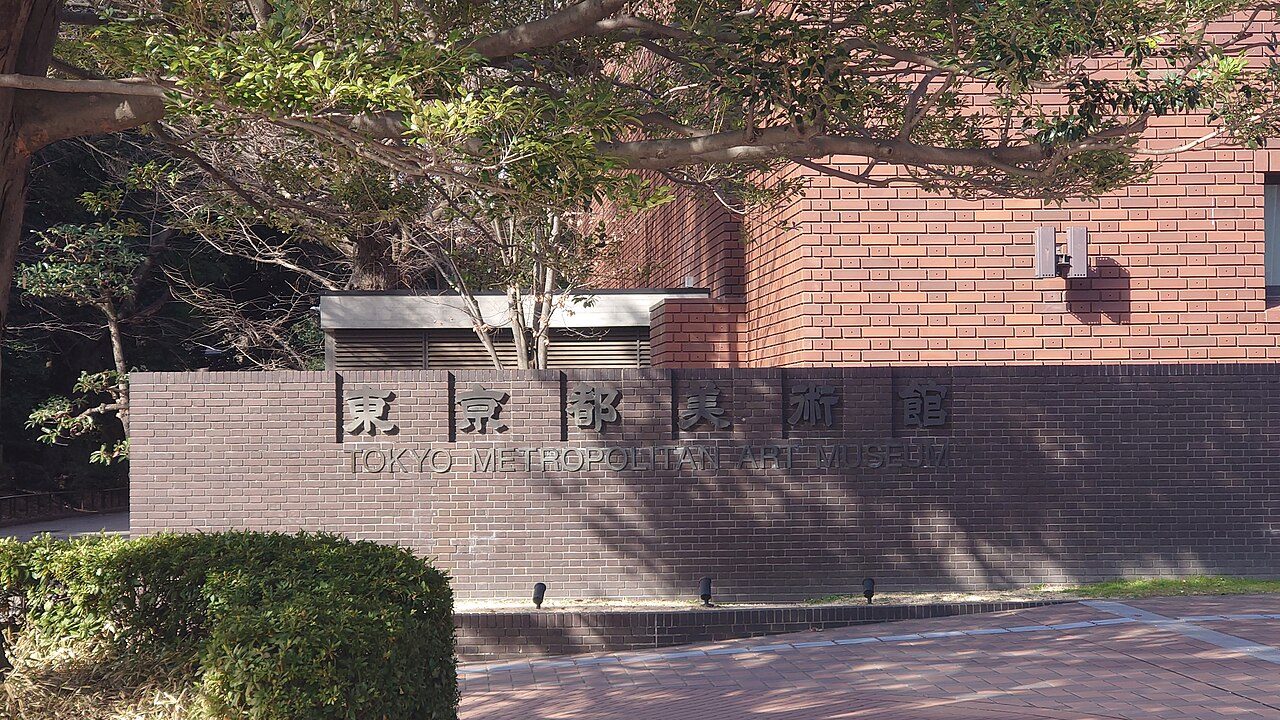
The Tokyo Metropolitan Art Museum in Ueno Park opened a free archives exhibition on November 19 to mark its hundredth anniversary. Titled "The History of the Tokyo Metropolitan Art Museum" in English (the Japanese title is Hajimari wo hiraku, roughly "opening the beginning"), it runs in Gallery B until January 11, 2027, and is organized by the Tokyo Metropolitan Government and the museum, which is operated by the Tokyo Metropolitan Foundation for History and Culture.
The museum opened in 1926 as the Tokyo Prefectural Art Museum. Its official exhibition site says Japan's early art venues were temporary halls built for Meiji-era expositions in Ueno, and that a Jiji Shimpo newspaper article on March 17, 1922 called for a permanent museum. The coal-business figure Sato Keitaro (1868-1940) donated one million yen toward construction, and the building opened on May 1, 1926. The show's prologue is devoted to him.
The exhibition is organized as a prologue, five chapters and an epilogue, and the museum's site names a number of specific documents. Chapter 1 pairs the original building, designed by Okada Shinichiro (1883-1932), with the new building that opened in 1975, designed by Maekawa Kunio (1905-1986) with its main floor underground. Listed items include a postcard of the museum's facade and a basement floor plan, so visitors can read the architecture through its own records.
The middle chapters follow what was shown inside. The first exhibition held at the museum, according to the site, included about 1,000 works, and group exhibitions were effectively halted in 1944. Chapter 3 covers encounters with foreign art, naming the collectors Ohara Magosaburo and Matsukata Kojiro; listed materials include catalogues from 1927, 1928 and 1934 and a poster for a 2008 Vermeer exhibition. Chapter 4 traces the shift toward a contemporary-art role: a Sato Memorial Room in 1953, the arrival of curators and librarians with the 1975 building, the transfer of collections when the Museum of Contemporary Art Tokyo opened in 1995, and the museum's return to organizing its own programs after the 2012 renewal.
Chapter 5, "a museum built by citizens," looks at the friends' association, public art-making sessions, art classes and the public art library. Items include a 1951 international children's art exchange exhibition and a 1979 public copperplate-printing session. In the epilogue, the museum compares its first year, when it hosted 10 open-submission exhibitions and 473,434 visitors, with today: roughly 10 special or planned exhibitions a year, more than 250 group and school exhibitions, and about two million visitors annually. Since 2025 it has also asked the public for photographs of the museum, and a selection is displayed.
The comparison is striking, but it is the museum's own tally. The site does not say whether the 1926 and present-day counts use the same definitions, and it does not describe how items are arranged in the gallery, so the figures are best read as the institution's framing rather than an independent measurement.
For visitors, Gallery B is open 9:30 to 17:30 (last admission 17:00), and until 20:00 on Fridays (last admission 19:30). The exhibition is closed on December 7 and from December 21 to January 3, 2027. Separate programs at the museum, including the "Ways of Reading" exhibition that opened the same day and a centenary symposium listed for December 12, have their own details and are not part of the free archives show. Inquiries can be made to the museum at 03-3823-6921.
 프리즘코리아 편집국 > Maya Collins